

World Sports Games & Athletics continues to change across separate Android and Apple editions. As of 14 August 2026, Google Play shows World Sports Challenge 2025 updated on 8 August 2026 with a brief “bug fixes” note. Apple’s public history for World Athletics & Sports Games records larger feature additions over time, including new modes, events and technical improvements.
This journal connects those dated first-party notes to the live World Sports Challenge overview. It keeps platforms separate and treats public reviews as feedback themes, not proof that a particular comment caused a product change.
Current Android snapshot: 8 August 2026
Google Play currently dates the Android update to 8 August 2026. The visible What’s New text says bug fixes, without naming the affected systems. That supports a maintenance statement and nothing more specific. It would be inaccurate to claim a performance gain, control correction or event change from this note alone.
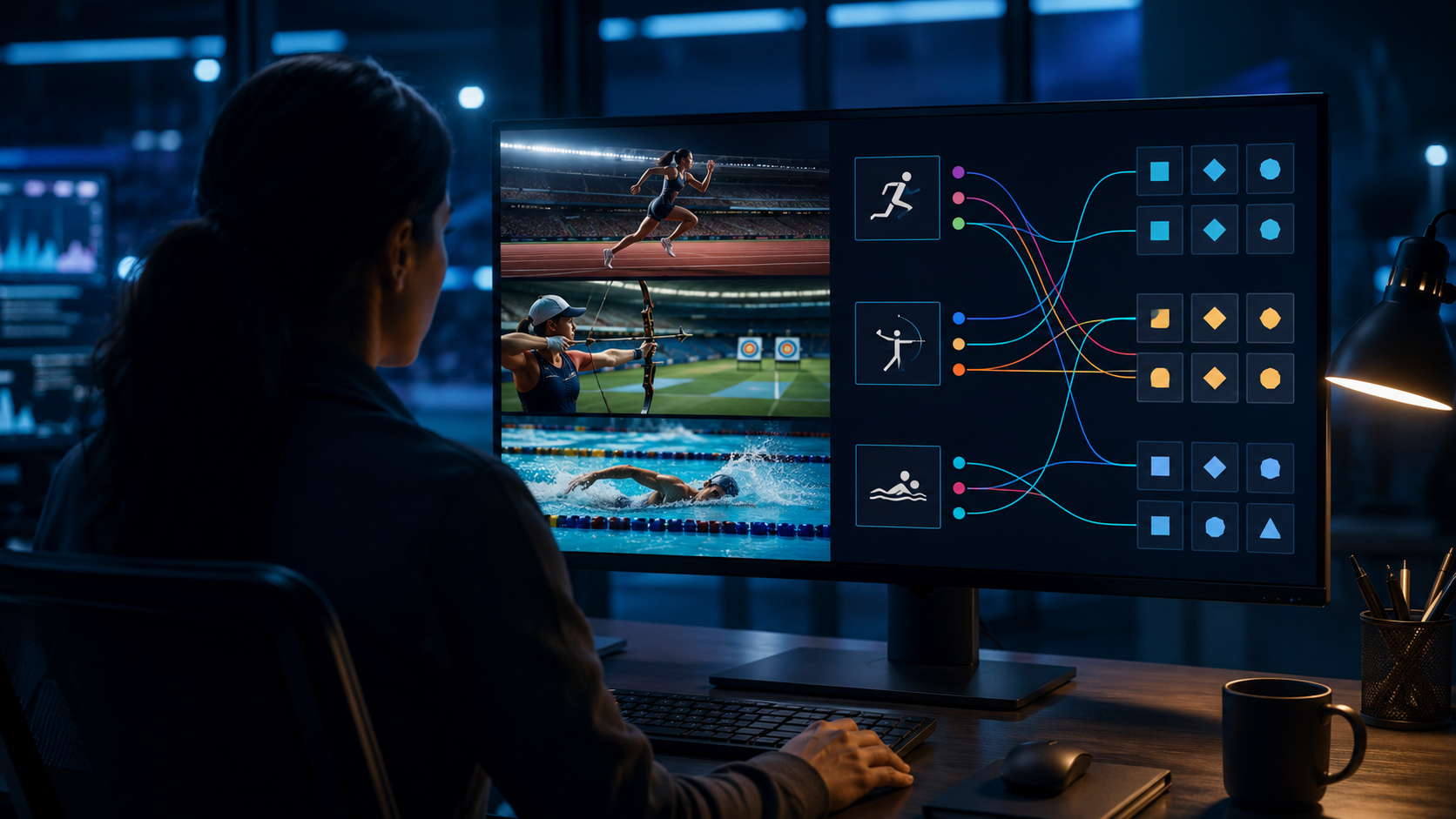
The current description names Tournament, Quick Play and Career and lists events spanning archery, swimming, cycling, track and field, weightlifting, jumps, throws and air pistol. Those are current catalog facts at the snapshot date, not necessarily additions from the August patch.
Apple version 2.2: maintenance note shown for 18 April
Apple currently displays version 2.2 with an 18 April date and a bug-fix description. The visible store view does not show a year beside that entry, so the date should be reproduced exactly as displayed rather than assigned an unsupported year.
As with the Android note, “bug fixes” does not identify the component. The safe conclusion is that maintenance continued. Any claim about a resolved issue requires a more detailed first-party note or an approved test record.
Apple version 2.1: new multi-sport structures
Apple dates version 2.1 to 23 February and describes new multi-sport Tournaments and Challenges. This is a meaningful structural change because it gives the broad event catalog additional ways to organize a session. A tournament connects performance across events, while a challenge can set a narrower objective.

The listing provides the feature statement but not every rule or eligibility condition. Players should open the current edition for exact format, and editors should avoid suggesting that the same release landed on Android at the same time.
Apple version 2.0: 17 December 2025
Version 2.0 is dated 17 December 2025 and introduces Challenges and Tournament alongside bug fixes. Because version 2.1 later refers to new multi-sport Tournaments and Challenges, the most careful reading is that these structures continued to evolve. That is an inference from the sequence, not a quoted development explanation.
The version history also supports a broader editorial point: a current mode description should take precedence over an older launch article. This legacy refresh removes fixed claims that no longer map cleanly to today’s store language.
Versions 1.8.1 and 1.6: tennis and rowing entries
Apple shows version 1.8.1 on 3 November 2025 with tennis and rowing in the update text. Version 1.6, dated 6 June 2025, also references tennis and rowing. The repeated appearance may reflect additions, refinements or store-note reuse; the notes alone do not establish which interpretation is correct.
The safe player-facing fact is that Apple’s history associates these disciplines with those releases. Do not use the history to promise their presence on Android or to state how they changed without inspecting the relevant builds.
Version 1.4: customization and rewards on 26 March 2025
Apple’s version 1.4 note names character customization and new rewards. This confirms that those elements were introduced or promoted in that Apple release. It does not validate the stale legacy claim that every current edition offers the same customization system.
When this journal is updated, current listing text should decide whether a historical feature remains central. Version notes are a record of change, not a permanent specification sheet.
Earlier maintenance and gameplay notes
Other Apple entries mention bug fixes, technical-stack updates and gameplay improvements. These phrases show ongoing maintenance but are too broad for claims about frame rate, loading time, balance or input response. If GameBee later provides measured technical details, add them with version, device scope and test conditions.
The same discipline applies to Google’s short notes. A generic improvement label should never be expanded into a precise result by editorial guesswork.
What public feedback is asking for
Google Play reviews visible at the snapshot date include recurring themes around ad frequency, requests for additional events or nations, tournament expectations, shop-interface behavior and archery calibration. GameBee responses in the listing acknowledge some comments, request more detail or say suggestions will be considered.
These exchanges demonstrate listening and support activity. They do not prove that a later patch implemented a request. To connect feedback with a shipped change, this journal needs a first-party release note that names the change or an approved GameBee statement making that connection.
Reviews also represent individual devices, markets and versions. A critical report can identify a risk worth testing without establishing a universal defect. Likewise, a positive review cannot guarantee the same experience for every player.
How to read this journal responsibly
Check the platform heading before using an entry. Confirm the version and visible date on the first-party store. Separate current description facts from historical notes. Treat editorial interpretation as interpretation, and never convert review themes into a causal product narrative without evidence.
For future entries, record five fields: date displayed, platform, version, first-party wording in concise paraphrase and the player-facing consequence that is directly supported. If the note is only “bug fixes,” the consequence remains “maintenance update”; it should not become a feature claim.
Update-history questions
Are Android and Apple on the same version schedule?
The checked listings do not support that assumption. They use separate store histories, dates and descriptions. Follow each platform independently and compare only when both first-party sources identify the same change.
Did the August 2026 Android update fix archery calibration?
Google’s visible note says only bug fixes. Public reviews mention archery calibration, but there is no verified causal link between that feedback and the August update. The claim should remain unmade.
Why does the journal include old Apple entries?
They provide a dated record of how modes, events and customization appeared in public release notes. They also help editors distinguish a historical addition from a current cross-platform promise.
How often should this journal be revised?
Update it when a first-party listing publishes a meaningful new version or when GameBee supplies an approved release note. Recheck all current facts, visible dates and links at the same time.
Verify the latest edition
Use the World Sports Challenge product information to identify the game, then open the current Google Play or Apple listing for your device. The first-party store remains authoritative for the latest version, terms and compatibility.