

The verified design frame for Zombieland is concise: it is a GameBee title assigned to mobile zombie survival, with fast-paced combat as a core search and player intent. Public sources in this package do not include a developer interview, design document or exact store build, so specific decisions cannot be attributed to the team as quotations or historical fact.
What can be examined responsibly are the constraints that the stated proposition creates. A mobile survival game must make threats readable on a small display, fit important actions within reachable controls, pace information under pressure and prove each additional platform through its own record.
Verified intent and analytical inference are different
The Zombieland project destination and live GameBee catalogue verify the product identity. The implementation matrix verifies the mobile, zombie-survival and fast-combat content direction. Those are first-party planning facts.
A statement such as the interface must preserve threat visibility is an analytical requirement derived from that direction. It should not be rewritten as the developers chose a specific interface unless an attributable GameBee source or the confirmed build demonstrates the choice.
Small screens make visual hierarchy a survival mechanic
On mobile, the objective, nearby threats, player state and action feedback compete for limited space. The most urgent information should remain readable without forcing the player to scan several corners while combat continues. Contrast, scale and motion need to signal priority without hiding the play area.
A practical design review captures the screen at calm, rising-pressure and failure moments. It checks which element attracts attention first and whether the player can explain what changed. This evaluates the outcome without claiming access to the original design rationale.
Control design should reduce simultaneous thumb conflicts
Fast combat can require movement, aiming, camera adjustment and an action within the same second. On a touch device, those inputs may compete for the same fingers and cover the same visual space. A successful layout keeps essential actions reachable and communicates when an input is unavailable.
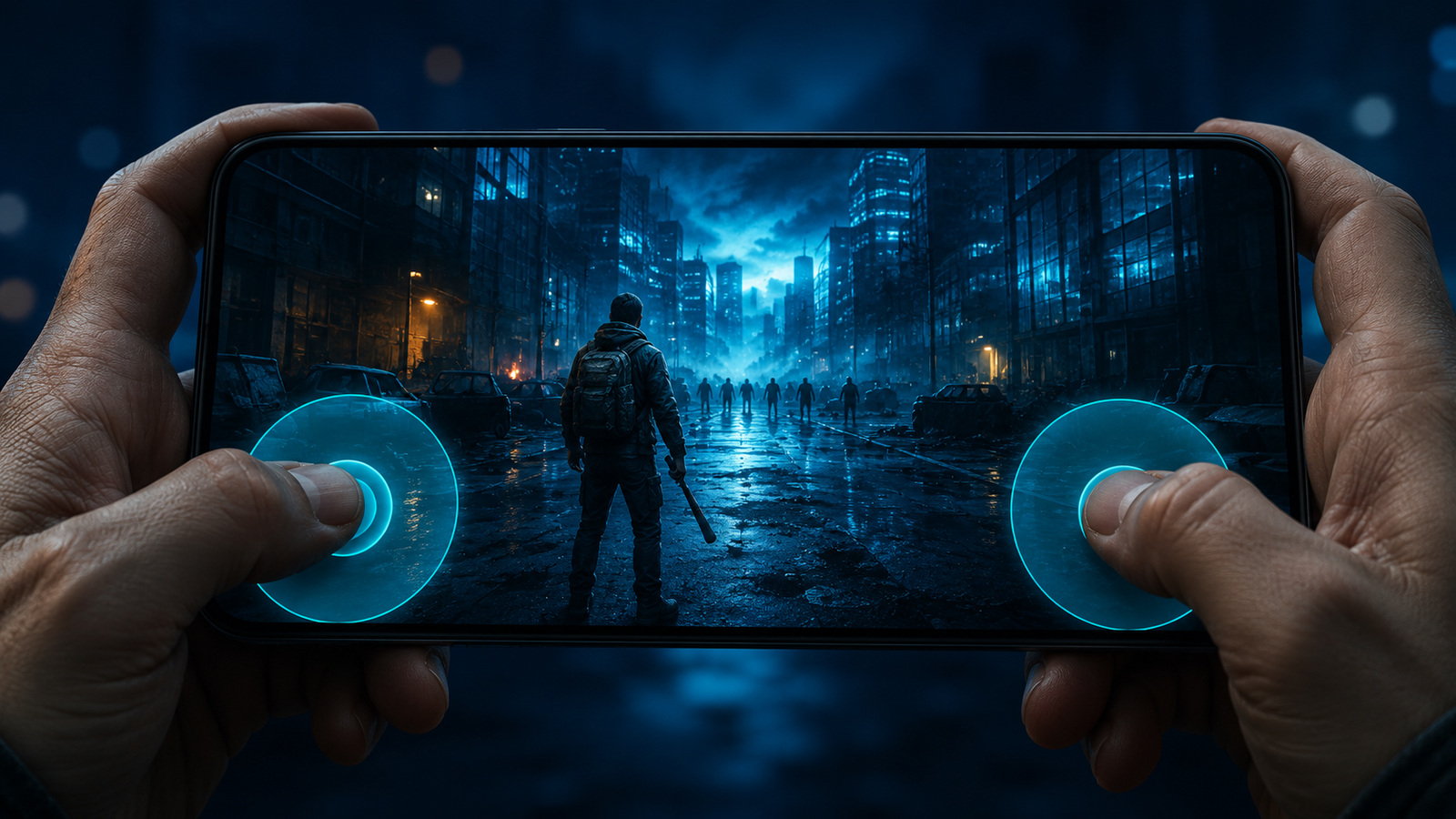
The current source set does not verify virtual sticks, tap zones, aim assistance, remapping or controllers. Each should be documented only after the canonical edition exposes it. Until then, the design test is outcome-based: can the player move, understand the target and act without accidental commands?
Pacing must create decisions, not only density
A survival loop becomes fast when decisions arrive quickly, but adding more enemies or effects is only one possible route. Pressure can also come from time, space, objectives or a visible resource. The actual Zombieland mechanism remains edition-specific.
The design review should map each pressure increase to the choice it creates. If the player cannot state the choice, the moment may be spectacle rather than readable challenge. A brief recovery interval can support learning without removing urgency.
Feedback closes the mobile control loop
Every important action needs an observable result: movement begins, an attack connects, danger changes, an objective advances or a command is unavailable. Sound, animation, vibration and interface signals can contribute, but the exact mix must be taken from the build.
Accessibility improves when the same critical state is not communicated by color alone. A design audit should check text, shape, motion and audio alternatives, plus readable type size and contrast. These are test criteria, not claims that the current edition already includes every option.
Performance budgets affect combat meaning
If an input response or animation becomes inconsistent under load, the player may misread a fair rule as random. Mobile adaptation therefore includes stable frame delivery, responsive controls, bounded loading and thermal behavior across the hardware range the store actually supports.
A credible performance record names the version, device, operating system, scene and duration. It does not turn one successful test into a universal claim. Without a verified store record, no specific hardware range should be attached to Zombieland in this article.
Every additional platform needs its own proof
Platform adaptation is more than resizing a screen. Television, desktop and mobile differ in viewing distance, focus behavior, input, navigation and session interruption. If Zombieland appears on another platform, its exact store ID and controls should be recorded as a separate edition.

Features and version notes should not move between editions merely because the product name matches. The parent can connect the family, while the store records preserve what each player can actually install.
How to turn this framework into a real development record
GameBee can strengthen this page by supplying an attributable interview, dated screenshots, a canonical mobile store listing and a version log. Each design claim should connect a constraint, a decision and the player-facing result. Unresolved or experimental work should be labelled accordingly.
Until then, the page remains useful as an honest map of the product’s design obligations. It explains how to evaluate controls, hierarchy, pacing and adaptation without pretending to know an undocumented production story.
Return to the Zombieland mobile survival review for the current player-fit and distribution verdict.
Questions about Zombieland design evidence
Is this an official Zombieland developer interview?
No. It is an evidence-led analysis of verified product intent and mobile design constraints. No undocumented decision is presented as a developer quotation.
Was Zombieland designed only for mobile?
The implementation matrix assigns it to the mobile cluster, but the exact supported platforms require canonical store records. No universal exclusivity claim is made.
Which touch-control layout does Zombieland use?
The current source set does not verify a named layout. The confirmed edition should be inspected before virtual sticks, tap zones, aim assistance or remapping are described.
What would verify a future platform adaptation?
An exact GameBee-owned store ID, displayed title, platform requirements, controls and dated version evidence. Each edition should retain its own facts.