
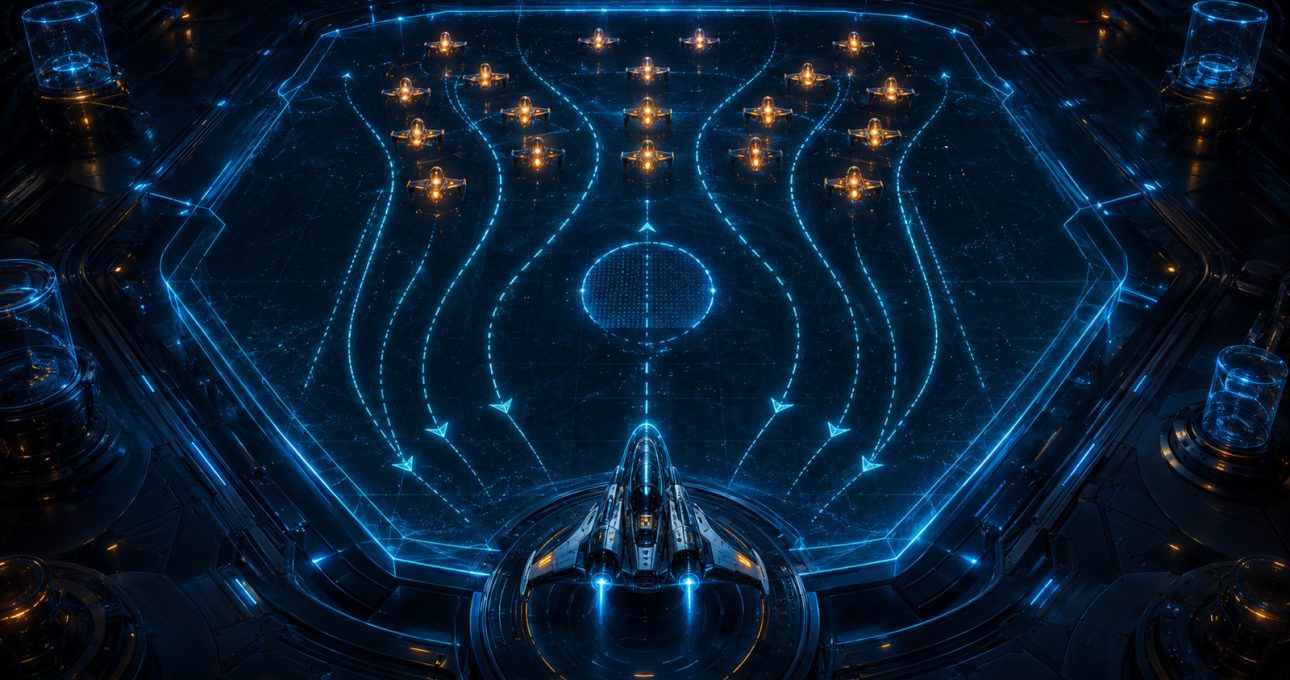
Surviving later challenges in 1945 Space War depends on learning the threat field before spending resources. The current Google Play edition supports slide movement, tap-and-hold attacks, upgradeable spaceships, power-ups and boss encounters under package com.gamebee.spaceshooter. The legacy GameBee profile supplies the familiar catalogue name.
This guide uses a repeatable method instead of a fixed build: diagnose the earliest failure, practise movement, choose one visible upgrade, test it in comparable play and keep only the change that solves the problem. Item names, costs and values must be read from the installed edition because they can change.
Begin by mapping one enemy wave
Use an early attempt to observe rather than chase a score. Watch where enemies enter, which lanes close first and whether a gap reopens after a firing pattern. The top-down view is most useful when the player looks beyond the ship and anticipates the next safe area.
Avoid large movements until the response is understood. A short slide may move farther than expected on a sensitive screen. Learning that relationship reduces panic corrections later, when the field is denser and the available space is smaller.
Keep the ship away from self-made traps
Many avoidable failures begin when the player reaches an edge without an exit. Move toward open space rather than simply away from the nearest threat. Before committing, check whether the destination leaves room for a second correction.
The exact collision and hazard rules belong to the current build. Use visual feedback from repeated attempts to learn how close the ship can safely pass. Do not rely on a pixel-perfect distance copied from another device.
Attack when the movement decision is already clear
Tap-and-hold attacking can encourage constant pressure, yet shooting should not replace positioning. First identify the next lane, then maintain the attack while moving through it. If holding the input makes movement less precise on the intended device, practise the combination in a calmer section.
Measure success by control retained, not only by how long the attack was active. A shorter window that preserves a safe position can produce a stronger complete run than a long burst followed by an unavoidable collision.
Diagnose the earliest repeated failure
After several attempts, describe what happens first. Does the ship lack damage against a boss, lose control in crowded waves, run out of room after an aggressive move or use a power-up too early? The first repeated cause is a better upgrade target than the final moment of defeat.
Write the diagnosis in plain language. If the problem changes from attempt to attempt, more practice may be needed before spending anything. An upgrade cannot reliably correct an inconsistent movement pattern.
Match one upgrade to one problem
Google Play confirms that ships can be upgraded, but it does not publish a universal priority list. Use the categories visible in the current build. Choose a change that directly addresses the diagnosis: more effective attack if damage is consistently insufficient, or another supported attribute if survival is the limiting factor.
Do not change the ship, several attributes and the play pattern at the same time. One-variable testing reveals whether the upgrade helped. It also protects limited resources from being scattered across changes that cannot be evaluated.
Compare results across three controlled attempts
Keep the ship, section and general movement plan consistent. Record the baseline outcome, apply one upgrade and repeat twice. Look for a meaningful difference: a boss phase ends sooner, a dangerous wave becomes manageable or the ship reaches a later checkpoint with more control.
One successful attempt can be luck. Two comparable improvements are more persuasive, although they still do not prove a universal best choice. If the result is unclear, return to practice before stacking another change.
Save power-ups for a named purpose
The store record recommends strategic power-up use without defining every effect. Before activating one, state the purpose: clear pressure, protect a recovery, shorten a difficult phase or preserve a promising run. The installed prompt should determine how and when the effect works.
Using a resource immediately can feel efficient but may leave the player exposed later. Learn the section first, then place the power-up where the need repeats. Avoid assuming that an effect carries between stages or combines with another unless the current edition shows it.
Treat a boss attempt as information gathering
On the first encounter, watch for the safest spaces and the point at which the boss becomes vulnerable or changes behaviour. The public description confirms boss fights but not their exact sequences. A later version may alter a pattern, so the visual cues in the current build take priority.
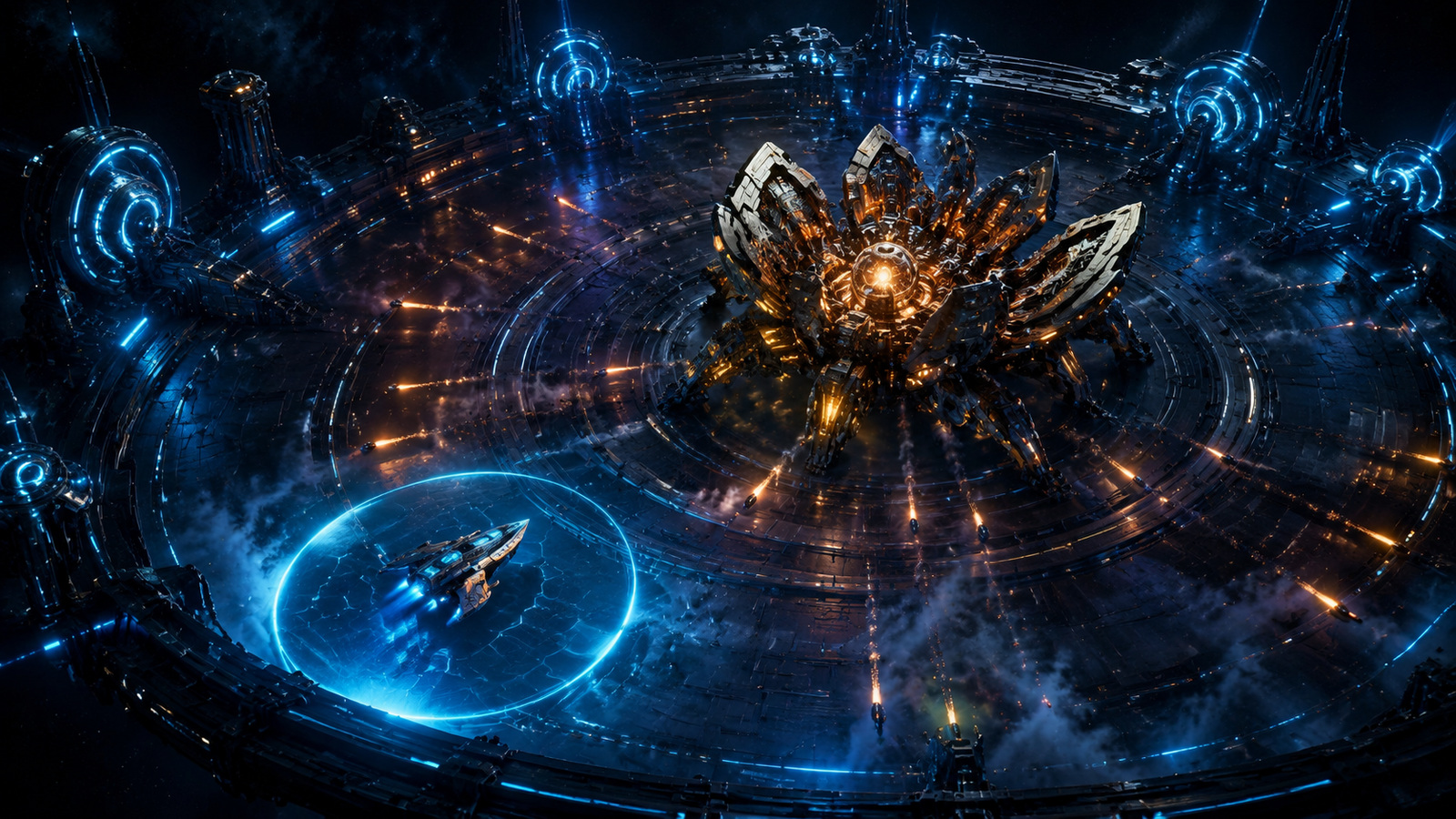
Use the second attempt to test one response. Reserve a power-up for the phase that caused the first failure. If the boss remains difficult, decide whether the limiting factor is damage, movement or timing before applying another upgrade.
Use offline practice to strengthen consistency
Offline play can support focused repetition without depending on a continuous connection, but verify that the chosen activity opens and saves correctly while disconnected. Installation, rewards and account functions may still require Google Play or connectivity.
Practise one skill per session: short slides, edge recovery, attack while moving or power-up timing. A narrow goal produces clearer learning than trying to improve every part of the run at once.
Keep a compact progression note
Record the date, current display name, ship, visible upgrade, problem and result. Do not include account information. This note makes it easier to recognise when an update changes behaviour and prevents an old recommendation from being repeated as permanent truth.
Players wanting another tactical action setting can inspect Air Assault; its helicopter identity is separate and does not supply mechanics for 1945 Space War. The GameBee catalogue offers the wider legacy collection.
1945 Space War upgrade questions
Which ship upgrade should be chosen first?
There is no universal first choice in the public record. Diagnose the earliest repeated failure, select one visible upgrade connected to it and compare the result across controlled attempts before spending further resources.
How can crowded enemy waves be survived?
Look ahead for the next open lane, avoid moving into an edge without an exit and use short, predictable slides. Preserve space for a second correction instead of reacting only to the nearest threat.
When should a power-up be used?
Use it for a named recurring need, such as clearing pressure or shortening a difficult boss phase. Confirm the exact effect and activation rule in the installed edition rather than assuming a duration or value.
Does offline play guarantee offline progress saving?
No. Offline play is listed, but saving and account behaviour are not fully defined. Test the intended mode and confirm that progress remains available before relying on a disconnected session.