

GameBee's current 3D sports titles reveal a consistent player-facing pattern: make the sport recognisable, reduce it to a clear repeatable decision, offer a compact mode or challenge, and leave room for deeper progress. World Sports Games uses individual events and Quick Play, Baseball Super League distinguishes Quick, Full and Tournament modes, and precision titles make one shot a complete unit of play.
These conclusions come from public game and store descriptions, not from private design documents. They explain what a player can observe and choose. They do not claim a particular engine, production method, retention result, frame rate or internal testing process.
A short session begins with one legible objective
In athletics, the objective may be to finish a sprint, clear a jump or hit a target. In baseball, it may be to complete a compact match. In golf, archery or pool, one shot can have a visible beginning, decision and result. A player does not need the entire sport explained before the first meaningful action.
The current World Sports Games description names events individually and places Quick Play beside longer modes. That structure lets someone choose a small unit without denying that a tournament or career can exist around it. Short-session design works best when the first goal is complete, not when a longer mode is simply interrupted.
Familiar sports reduce the explanation burden
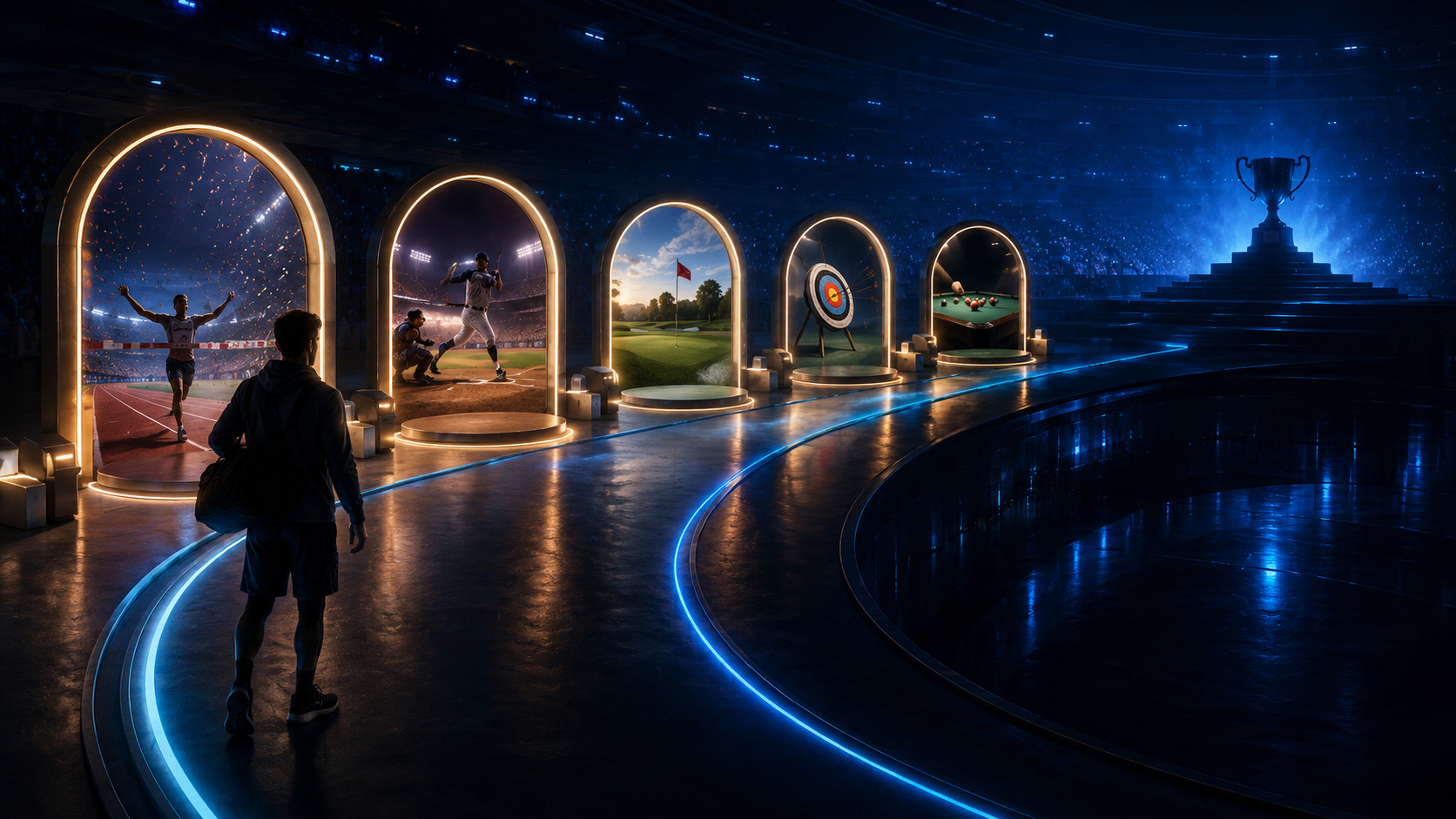
A baseball diamond, athletics track, golf green, archery target or pool table immediately communicates part of the rule set. The 3D environment can show direction, distance and consequence through spatial relationships that players recognise. The interface still needs to explain the game-specific control, but the sport supplies a useful mental model.
Recognition should not be confused with simulation accuracy. A public description can say that a game presents a 3D sport and name its actions. It cannot prove real-world physics or professional authenticity without specific evidence. For a short session, clarity is often more valuable than an exaggerated realism claim.
One input decision carries the moment
The strongest compact sports loops concentrate attention. A sprint may emphasise timing. A baseball swing asks when to commit. A golf shot asks for direction and power. Archery asks for aim and release. Pool adds spin and future position. Each outcome can be understood as a response to a small number of visible decisions.
Golf Pro Tour describes swing, putting and terrain choices. Archery Arena describes target types, distances and time challenges. Pool Masters Pro describes touch aiming and power. The games differ, but each makes the central action easy to name.
A result should arrive quickly and teach something
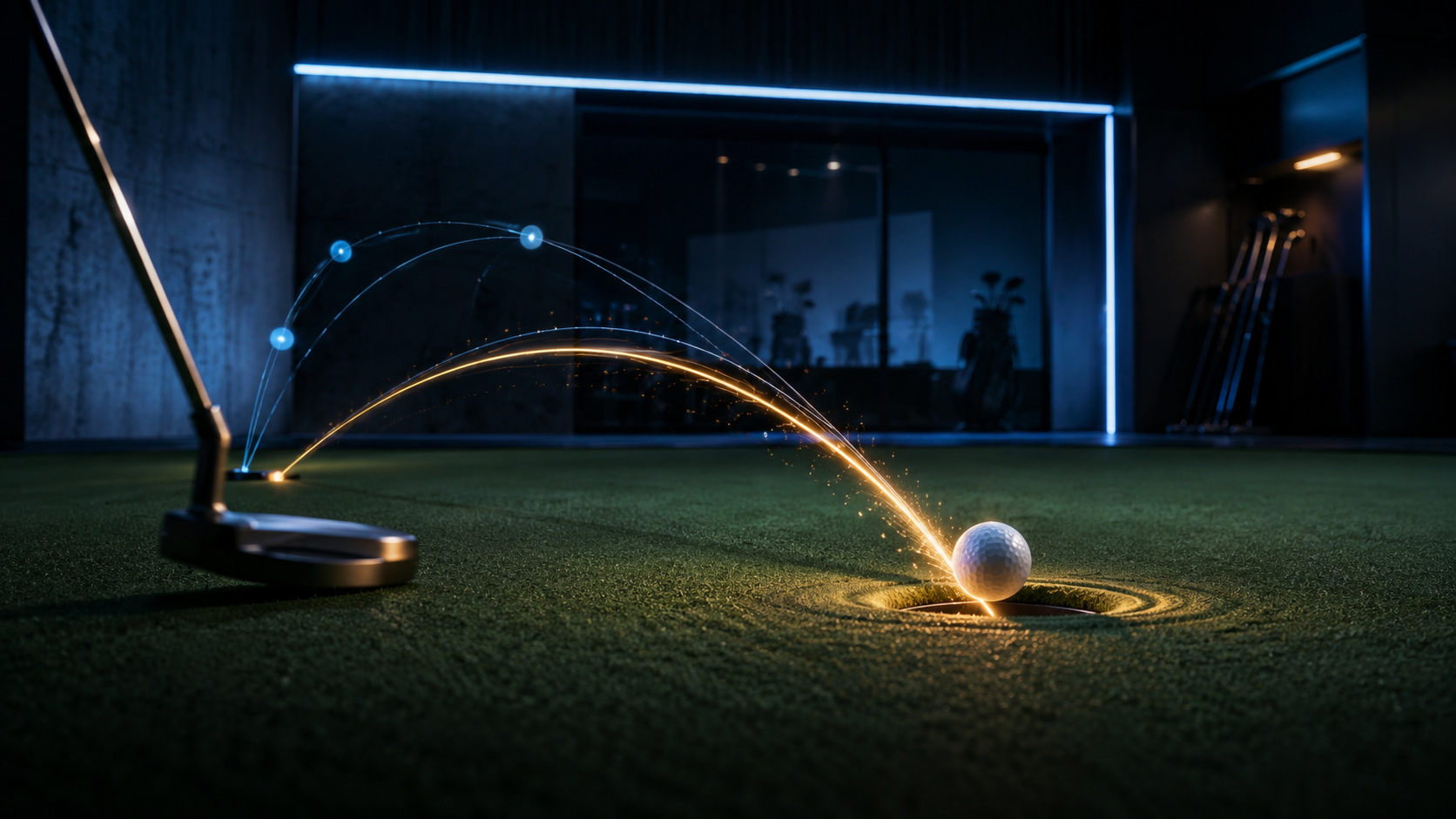
A compact action becomes satisfying when the result is visible. The player sees a race time, hit, miss, ball position, score or completed challenge. That result supplies feedback for the next attempt without requiring a long explanation. A missed target can suggest an aiming correction; a poor lie can suggest a safer golf decision; an unsuccessful swing can change timing.
Reviews can surface friction, but one comment is not a representative design fact. Attribute a GameBee change to feedback only when a dated update note connects them.
Mode labels protect different amounts of time
The current Baseball Super League Apple edition names Quick, Full and Tournament modes. Those labels help the player select a commitment before play starts. World Sports Games similarly distinguishes Quick Play, Tournament and Career in its current Android description.
A useful short mode should not be presented as a lesser version of the sport. It answers a different need: a complete contest or event in limited time. Longer modes then add continuity, stakes or progression. Clear labels reduce the risk of beginning a session that cannot be finished comfortably.
Variety and focus solve different short-session problems
World Sports Games uses variety: a player can change from running to swimming, cycling, throwing or precision events. This refreshes the decision pattern without requiring a new app. Baseball and the current Ultimate Cricket Android edition use role changes inside one sport. Golf, archery and pool use focus, allowing the player to repeat a narrow skill and notice smaller improvements.
Neither approach is universally better. Variety suits someone who wants a fresh challenge after one event. Focus suits someone who wants the next attempt to refine the last. A discovery guide should present both rather than treating all casual sports play as interchangeable.
Progress gives a reason to return without lengthening every attempt
Tournaments, careers, leaderboards, equipment and unlocks can connect short actions across days. The current first-party descriptions name several of these structures in particular editions. The important boundary is that a progression feature belongs to the record that states it; it should not be applied to an entire game family.
Progress should not obscure commercial terms. Players can inspect current equipment, subscription and purchase disclosures before deciding whether the return loop fits.
Screen and input shape the same sports idea
Mobile touch lets a player act directly over a control or aiming area. A television changes viewing distance and may use a remote or controller. A compact loop has to remain understandable under the input supported by its exact edition. That is why separate mobile and TV packages should be verified separately.
The Pool Masters television edition provides a public example of remote-led aim, spin and power. Its Apple mobile relative describes touch precision. The shared shot-planning idea survives, but the physical conversation changes.
Stopping points make short play respectful
A short-session sports game needs a place where the player can stop without abandoning a long sequence. The end of an event, inning, match, hole, duel or challenge can provide that boundary. Store mode descriptions help identify these units, although actual duration can vary with skill, setup and advertising.
Players should test the first launch before relying on a title for a fixed break. Downloads, tutorials, privacy choices and updates are setup, not play. Once the game is ready, the natural unit becomes a better predictor of fit.
How to read these patterns without overclaiming
Use current first-party descriptions to name modes, controls, events and devices. Keep screenshots tied to their edition, and avoid proprietary, performance, analytics or commercial-success claims without evidence.
This keeps authority verifiable and lets individual facts change with live listings without rewriting the interpretation.
Short-session design questions
What makes a sports game suitable for a short session?
A clear central action, a quick path into play, a complete result and a natural stopping point make the session manageable. A named Quick mode or individual event provides useful evidence.
Does a short-session game have to be easy?
No. The rules can be quick to enter while timing, aim and strategy remain demanding. Archery, golf and pool all support compact attempts with room for mastery.
Why do mobile and television editions need separate checks?
They can use different packages, inputs, interfaces, modes and commercial terms. A shared title identity does not prove that the player experience or progress is identical.
Are these GameBee's internal design rules?
No. They are player-facing patterns inferred from current public descriptions. Any statement about GameBee's private workflow or technology would require an approved internal source.
Short sessions become meaningful through complete decisions
The observable strength across GameBee's sports catalogue is not simply speed. It is the ability to make one event, match or shot feel like a whole decision. Players can choose the sport, mode and screen that fit the time available, then return for deeper mastery when they want more.