
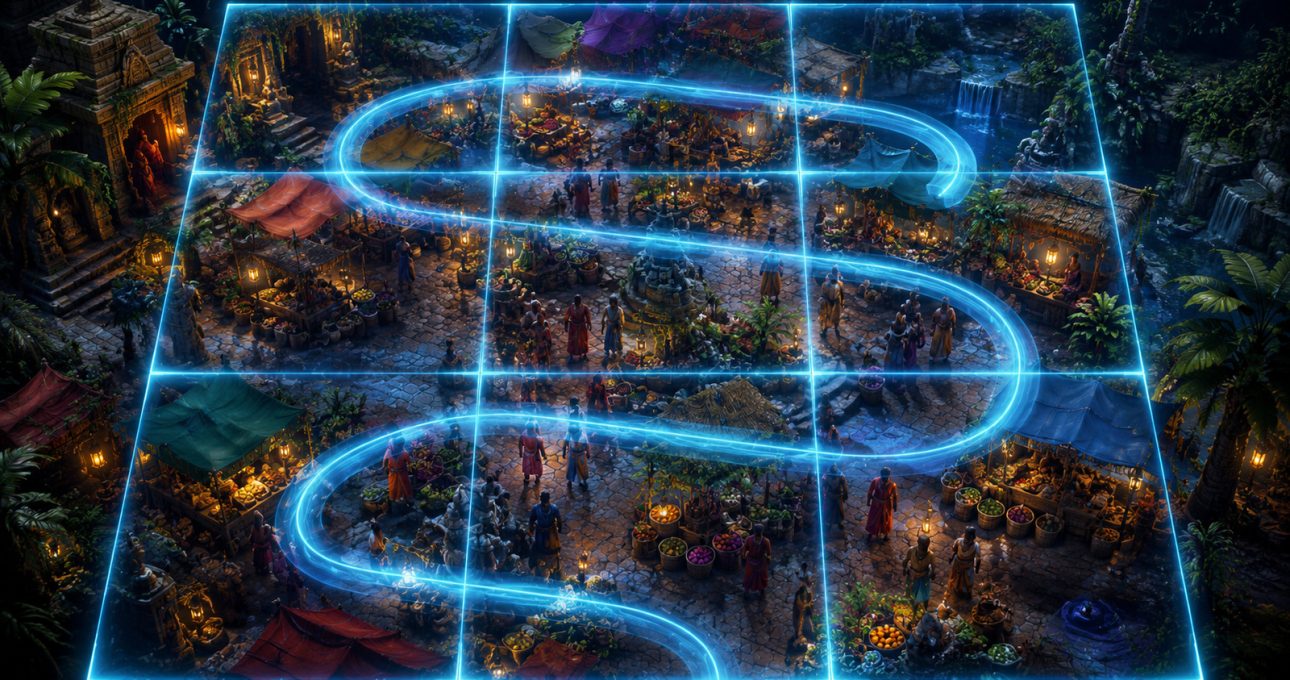
The fastest reliable way to find hidden objects is to replace random eye movement with a fixed scan. Divide the scene into a small grid, finish one region before moving on, and compare each target by silhouette, colour and likely context. The exact Google package supports relaxed and timed searching, hints, boosters and progressive difficulty.
Practise the method without a clock first. A calm pass reveals whether the real problem is scene coverage, target recognition or an assumption about where an object belongs. Once that weakness is known, timed play becomes a prioritization exercise instead of a race to tap every visually busy area.
Learn a scene in relaxed mode
Relaxed mode removes the pressure that often causes duplicate scanning. Use it to understand the art's scale, contrast and hiding style. Notice whether targets are partially covered, rotated, recoloured or placed near visually related objects rather than assuming that every item appears in an ordinary orientation.
Complete one deliberate pass before asking for assistance. The goal is not simply to finish the list; it is to learn which visual condition creates the miss. That knowledge transfers to new scenes more reliably than memorizing one revealed location.
Scan in a fixed grid instead of wandering
Imagine three columns and three rows, or use another division that fits the screen. Start at a consistent corner and move through every region in the same order. Within each region, sweep from one edge to the other before advancing.
A grid reduces the chance of repeatedly inspecting the centre while neglecting corners and borders. If the interface supports zoom or panning, complete the visible grid at one scale before changing it. Otherwise the map in your memory changes and coverage becomes harder to track.
Match silhouette, colour and context separately
Begin with shape: count long, round, angular or branching forms that could match the target. Then compare colour, remembering that lighting or partial cover may alter it. Finally ask where the object could plausibly blend into the scene's story and texture.
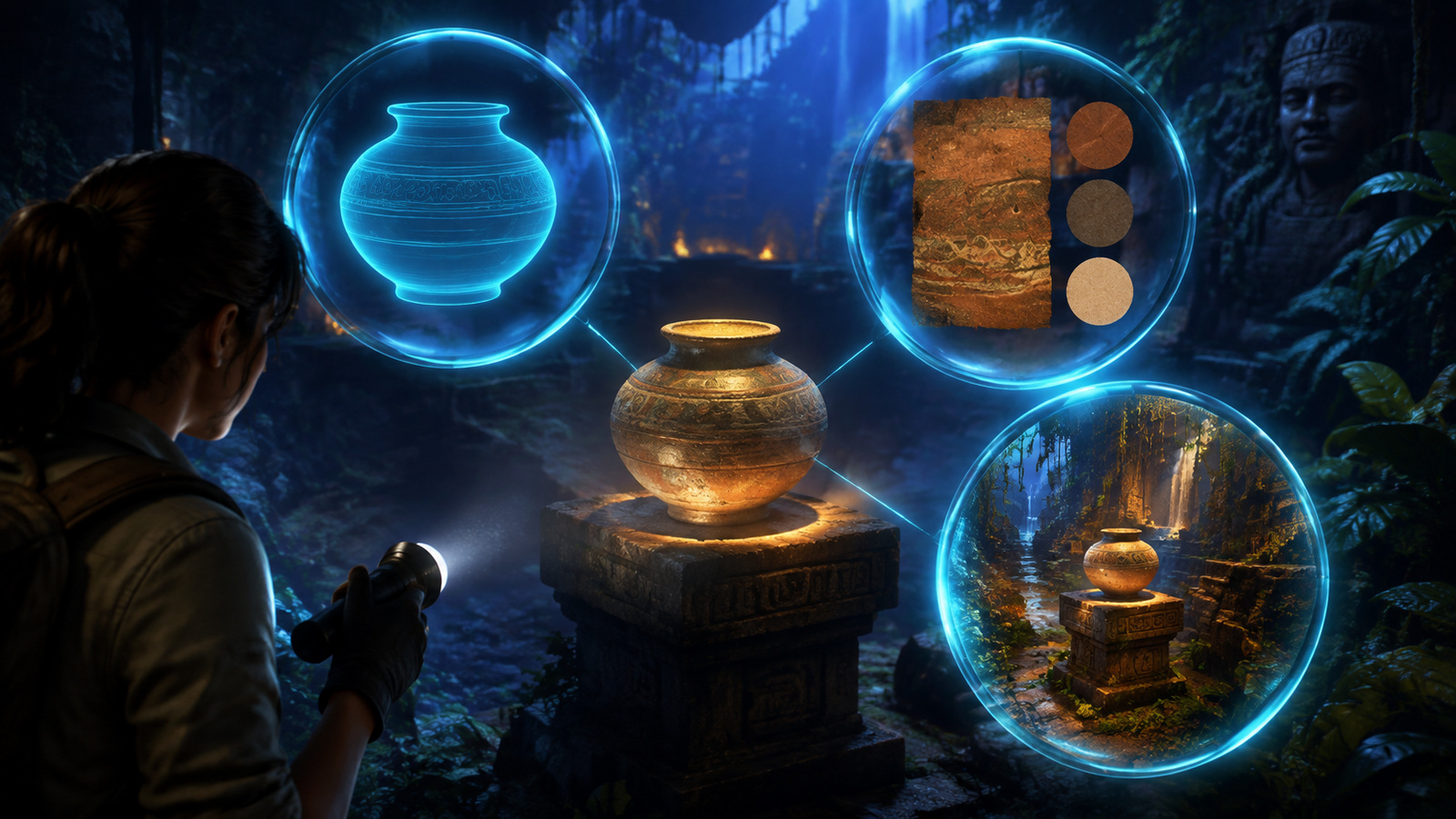
Do not require all three signals to be obvious at once. A target may share colour with the background but retain a distinctive outline, or it may be visible only as a familiar fragment. Separating the clues stops one misleading expectation from eliminating the correct region.
Prioritize the visible objective list
If several targets are shown, begin with the one whose silhouette or colour is most distinctive. Finding an easy item reduces visual and memory load, and its removal from the list can make the remaining comparison clearer. Then choose the next target deliberately.
When the current build changes the objective list during a round, pause long enough to identify the new item rather than continuing the old scan automatically. The visible task is always authoritative; this guide does not assume a fixed number or order of objects.
Use hints as diagnostics, not reflexes
Before using a hint, name the reason you are stuck: incomplete coverage, uncertain silhouette, poor contrast or time pressure. After the reveal, compare that diagnosis with the actual target. If it was in an unscanned corner, repair the grid; if it was disguised, update the recognition rule.
Hints and boosters are documented, but their quantities, prices and effects belong to the live build. Set a personal rule such as one complete scan before assistance, not a universal resource formula. The purpose is to spend help where it produces learning or protects a timed run.
Adapt the method for timed play
Under a clock, use a faster first pass for obvious shapes and colours, then return with the full grid for difficult targets. Avoid tapping every suspicious detail, because false actions can consume attention even when the game does not expose a penalty in the public description.
Set a decision point based on the visible timer rather than an invented number. If one target has resisted a complete pass and time is becoming scarce, assistance may be more valuable than repeating the same scan. Preserve enough attention to interpret the reveal and finish the remaining objective.
Separate search focus from the other modes
The current update names Match 3 mini-games and Endless Mode. A matching puzzle rewards pattern and move evaluation, while an endless activity may change pacing or progression. Neither should be treated as proof that the hidden-object grid works unchanged in every activity.
Read the current mode objective before applying a technique. Carry over broad habits such as deliberate scanning and controlled assistance, but rebuild the decision order when the screen, timer or success condition changes. This keeps the guide useful without inventing mode-specific mechanics.
Use a short repeatable search routine
First, inspect the objective list. Second, choose the most distinctive target. Third, scan the scene in a fixed grid. Fourth, compare shape, colour and context. Fifth, use a hint only after naming the unresolved problem. Repeat from the objective list after each find.
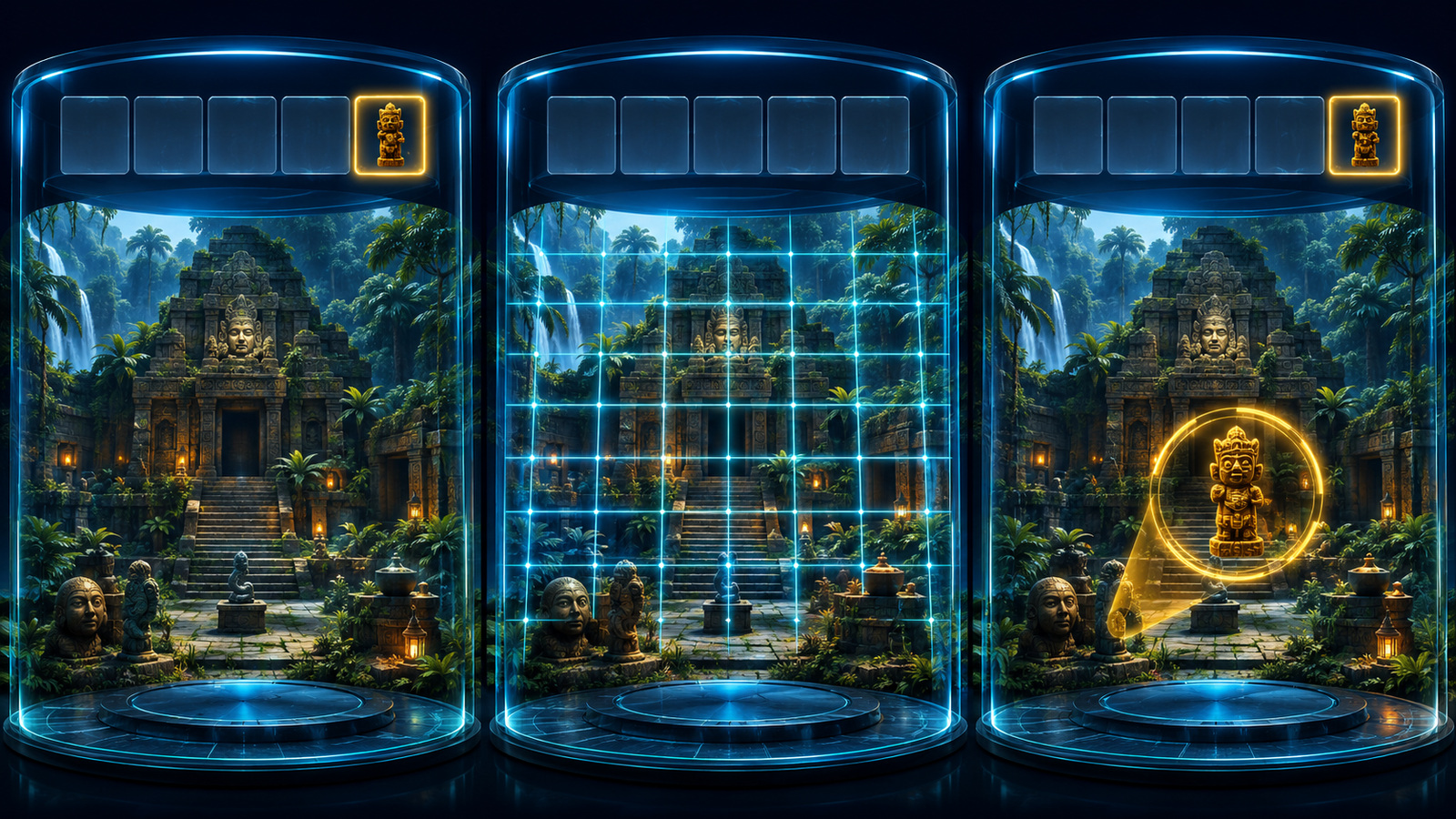
At the end, remember one miss and its cause. On the next scene, correct that one habit before trying to move faster. Consistent coverage and better recognition usually create speed as a result; speed without a map only makes random searching harder to diagnose.
See the dated Hidden Objects update ledger for the verified March 2026 additions and evidence limits.
Questions about faster hidden-object searching
What is the quickest way to scan a hidden-object scene?
Divide the image into a small grid, begin at the same corner and complete each region once. Track coverage before changing zoom, direction or target.
Should I practise in timed or relaxed mode?
Start in relaxed mode to learn scene coverage and disguise patterns. Move to timed play after the scan order is consistent, then prioritize obvious targets before difficult ones.
When should I use a hint?
Use a hint after one complete scan or when the visible timer makes another identical pass too costly. Identify why you missed the target so the reveal improves the next search.
Does this guide give exact object locations?
No. Locations can vary by scene or update, and publishing a fixed map would bypass the observation skill. The method is designed to remain useful across documented modes.