
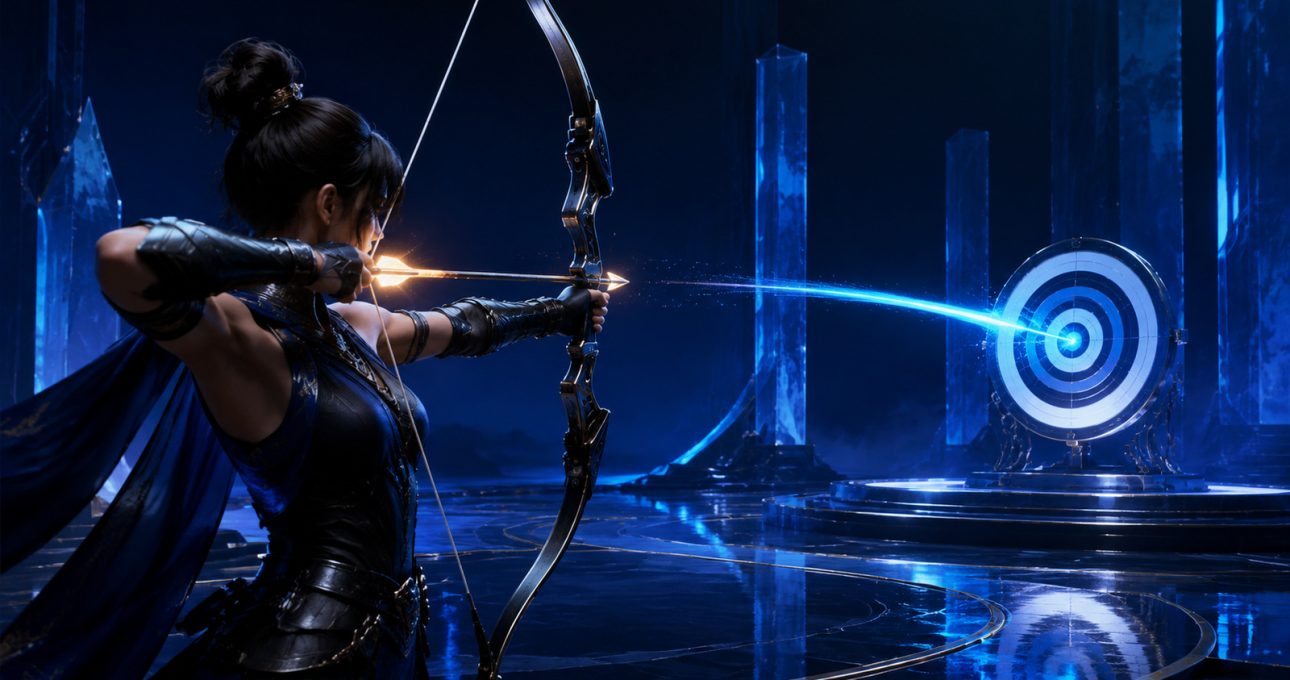
Archery Arena: Shooting Clash is a 3D bow-and-arrow game built around aiming, release timing and target reading. The current Apple listing verifies physics-based shooting, moving and long-distance targets, timed challenges, real-time PvP duels, tournaments, gear upgrades and both offline and online modes.
That gives the game a clear player proposition: practise a readable shot loop, then apply it under changing distance and competitive pressure. The public listing does not establish a wind system, exact equipment statistics or identical behaviour on every compatible device, so this review keeps those details outside the verdict.
Bow mechanics begin with a readable shot cycle
A useful archery game makes the relationship between aim, release and impact easy to understand. Apple describes smooth aim controls and physics-based shooting, but the stronger test is practical: can a player repeat the same setup, release under similar conditions and understand why the arrow landed high, low or to one side?
The opening session should be judged on feedback rather than spectacle alone. Target visibility, reticle movement, release response and the transition to the result all need to form one understandable sequence. When those signals are clear, a missed shot becomes information that can improve the next attempt.
PvP changes the cost of a rushed release
The listing explicitly supports real-time archery duels and tournaments. Competitive play makes consistency more important because a rushed correction cannot be hidden inside a long solo retry. Players benefit from establishing one dependable pre-shot rhythm before reacting to an opponent's score or pace.
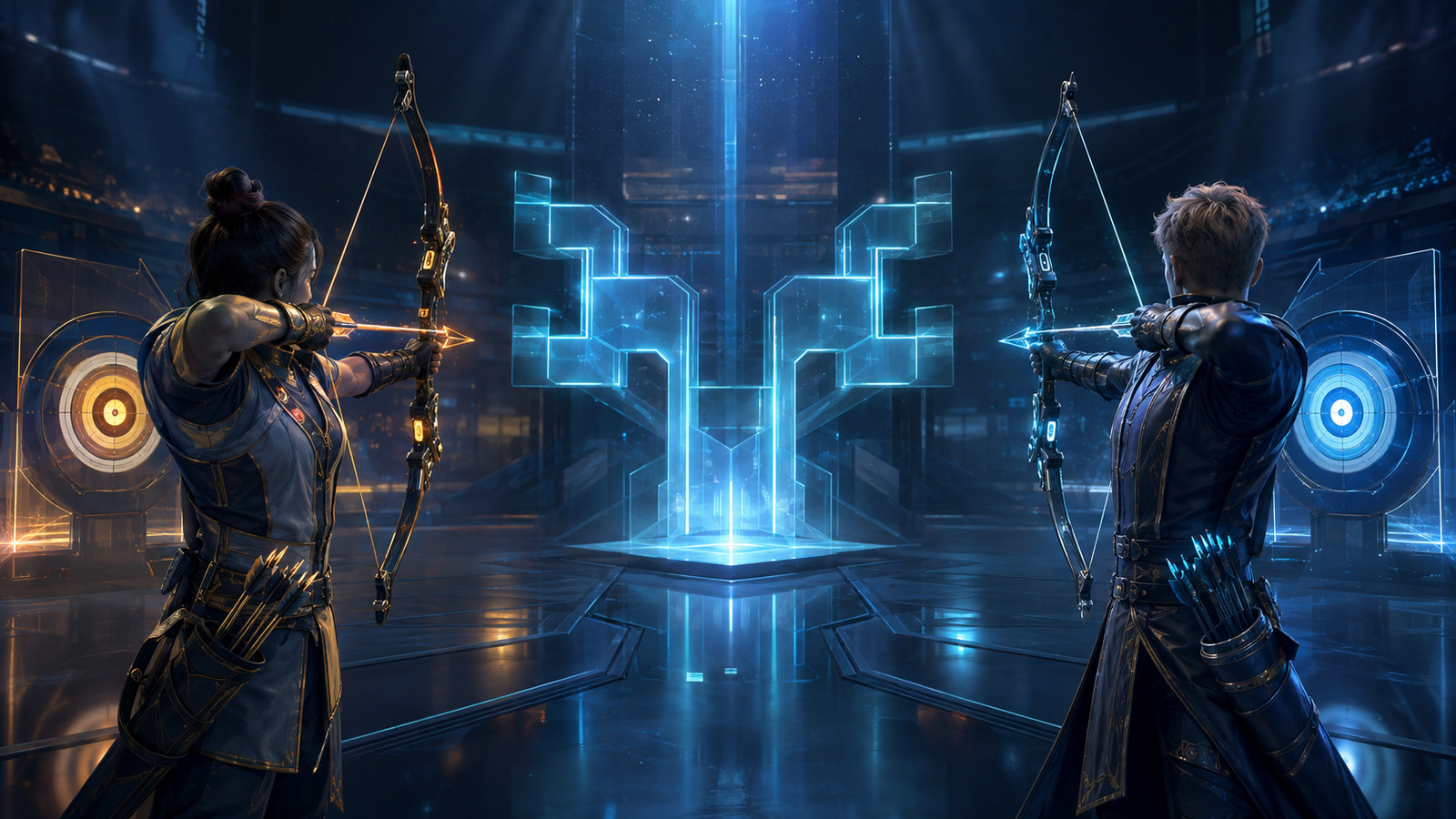
A fair review should not promise matchmaking speed, rank structure or tournament rewards that the public source does not explain. Instead, test whether the competitive objective is visible, whether the shot sequence remains legible under pressure and whether the result makes the next decision clear.
Target movement and distance create distinct tests
Moving targets test prediction and patience, while long-distance shots magnify small aiming errors. Timed challenges add a third demand by limiting how long the player can refine the setup. These are related skills, but success in one does not automatically prove mastery of the others.
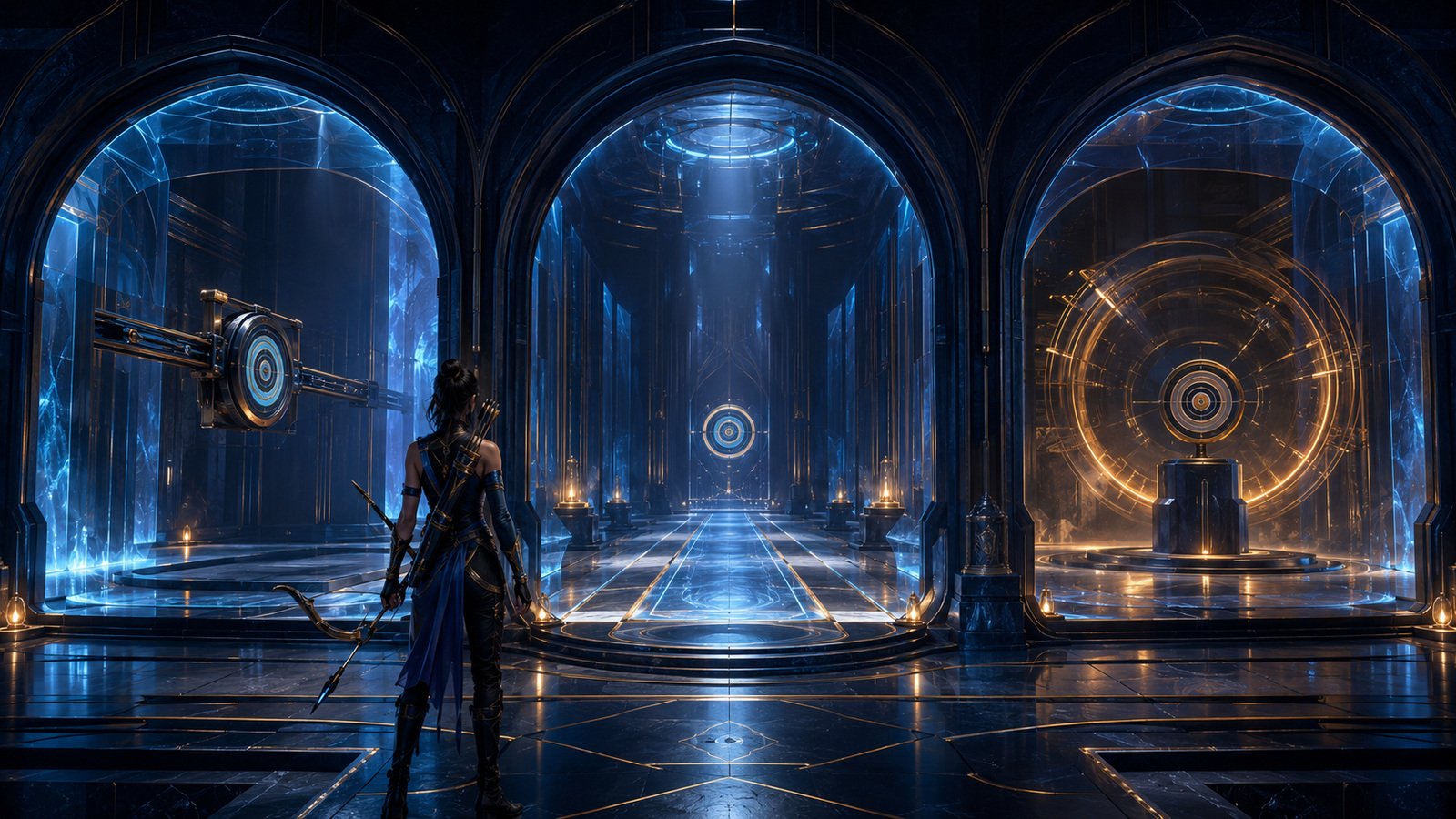
The most useful difficulty curve introduces one variable at a time before combining them. A player should first learn a stable target, then a moving target, then a longer or timed attempt. The listing confirms those challenge types, but it does not publish their order, count or exact scoring rules.
Gear supports progression without proving power values
Apple names bows, precision arrows and equipment that can be unlocked as the player progresses. That establishes a progression layer and gives practice a longer-term purpose. It does not show a complete stat table or prove that one item is universally best for every challenge.
Players should compare the labels and effects visible in the installed build, then change one item at a time. If accuracy improves, separate the influence of equipment from improved timing or familiarity. Purchases and subscriptions are current commercial context, not evidence that payment is required for a particular result.
Offline and online modes serve different sessions
The listing states that Archery Arena includes offline and online modes. Offline access can support low-pressure practice when a network is unavailable, while online play provides the verified competitive context. The source does not say that every event, reward or progression feature works in both conditions.
Before relying on offline play, launch the installed edition once, check the mode menu and confirm which activities remain available without a connection. Before a tournament, verify network stability and current event requirements. These checks respect the listing without turning a broad availability statement into a universal promise.
Platform fit is Apple-specific
Apple currently lists iPhone and iPad, with iOS or iPadOS 13.0 and later. The compatibility section also allows Apple-silicon Mac installation under stated requirements, while the product header says the app is not verified for macOS. Those two qualifications belong together.
The same record lists visionOS compatibility, but compatibility alone does not document a vision-specific interface. Review the controls on the intended device rather than assuming one layout or level of optimization across iPhone, iPad, Mac and Apple Vision. No Android edition is established by this source.
Commercial and age signals belong in the choice
The current Apple presentation is free with in-app purchases and advertising, carries a 9+ age rating and identifies Game Bee Studio as the developer. The ratings area does not yet show a broad overview, so popularity or satisfaction claims would be premature.
Families and individual players should still inspect the current store disclosures and purchase controls before installation. An age label describes the storefront classification, not the difficulty of competitive play or the suitability of every advertisement. Prices and available offers also need a live territory check.
Verdict: focused archery with clear evidence boundaries
Archery Arena has a well-defined core: physics-led aiming, varied targets, gear progression, offline practice and real-time competition. It is most relevant to players who enjoy repeating a compact skill and noticing small improvements in release timing and target reading.
Choose it for that verified loop, not for an assumed wind simulator, a promised ranking economy or universal device behaviour. Confirm the exact Apple edition, learn the opening shot sequence, test one moving target and only then decide whether the competitive pace suits the way you want to play.
Use the opening session as a fit check
A practical first session should include one stable target, one moving or distant challenge and one look at the available offline and competitive choices. That sequence tests control clarity, target readability and session variety without requiring a long commitment or an assumption about later progression.
Finish by checking whether the next useful action is obvious: practise a specific miss, inspect verified gear labels or enter an event whose rules are visible. If the edition instead creates uncertainty about controls, compatibility or purchases, resolve that question before treating a single result as the full experience.
Use the evidence-safe Archery Arena practice guide to turn this review into a repeatable aiming and tournament routine.
Questions before choosing Archery Arena
Does Archery Arena include real-time PvP?
Yes. Apple explicitly describes real-time archery duels and tournaments. The listing does not publish complete matchmaking, ranking or reward rules, so check those in the current build.
Can Archery Arena be played offline?
Apple states that offline and online modes are available. Confirm which activities work offline in the installed edition because the listing does not say that every event or progression feature is shared.
Does Archery Arena have wind that affects arrows?
The checked Apple description does not verify a wind mechanic. Do not use a wind formula or assume wind affects a shot unless the current build or an approved first-party source shows it.
Is Archery Arena verified for Mac?
Apple lists compatibility for Apple-silicon Macs under stated requirements but also labels the app not verified for macOS. Treat installation compatibility and Mac optimization as different questions.