
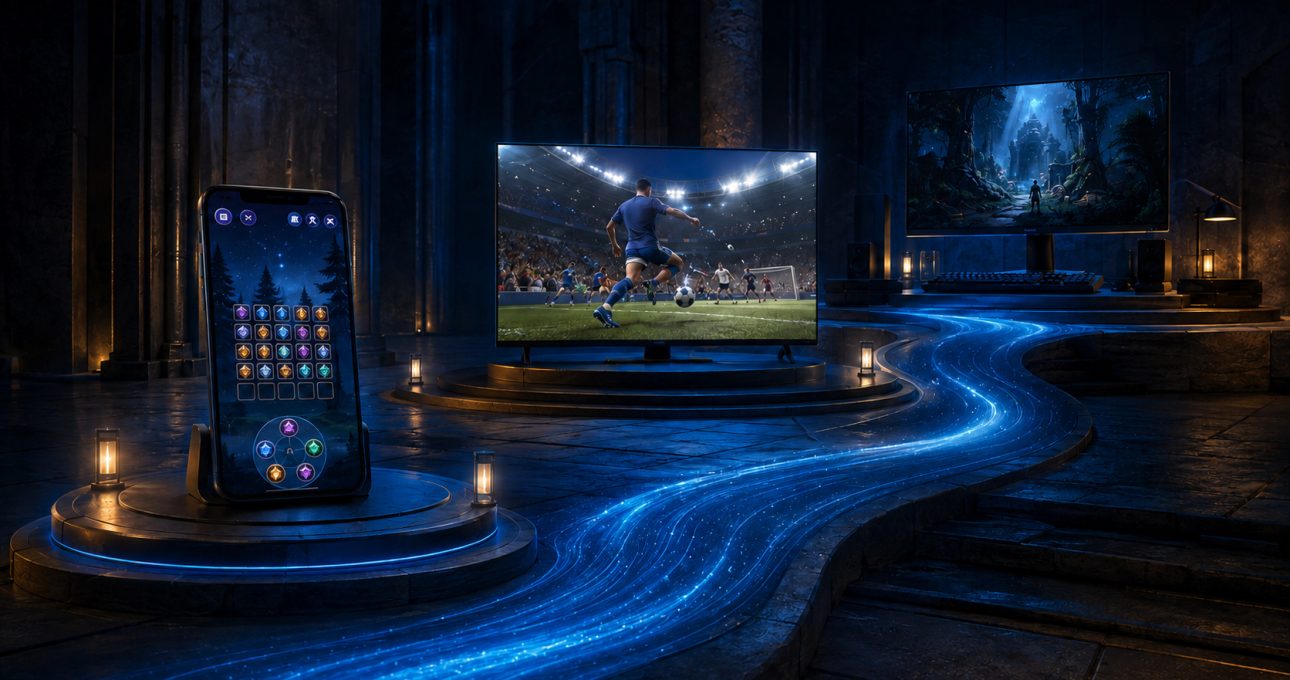
GameBee's public multi-platform story begins with games that can be inspected today on mobile and connected-TV stores. The studio's approved direction then points toward PC, with Lost World: The Game of Destiny named as a planned project. The mobile and television evidence is current; the PC release remains a future milestone until an official storefront, media and player action can be verified.
That boundary makes the journey easier to understand. Multi-platform does not mean that every game exists on every device or that one build travels unchanged among screens. It means GameBee has accumulated public experience releasing related game ideas through distinct store editions, while preparing to add a new player context.
The visible foundation is mobile discovery
GameBee's Google Play developer catalogue includes mobile and Android TV records, while Game Bee Studio on Apple presents current iPhone, iPad and selected Apple TV availability. These stores give players direct evidence: developer identity, supported device, commercial terms, version history and the current install action.
Mobile accommodates a broad range of session types. A runner can begin immediately. A word puzzle can be considered one move at a time. Baseball, athletics, golf, archery and pool translate familiar sports into touch-led decisions. The variety is useful, but it does not justify a blanket claim that all GameBee titles share the same mode, audience or lifecycle.
Connected television adds a room, not just a screen
GameBee's official site describes a focus on connected-TV publishing, and current store records show television-specific packages. On a TV, the player sits farther away, navigates through focus states and may use a remote or game controller. The game is also more visible to everyone in the room, which can change how a session is started, shared or observed.
This context is visible in separate editions. Baseball Super League on mobile and Baseball Super League 3D – TV are distinct records. They make a stronger multi-platform proof point than a broad slogan because a player can verify each destination independently.
Related identities do not erase edition boundaries
A recurring title can help someone move from a familiar sport on one device to a related experience on another. Yet the new edition carries its own input, interface, update history and store contract. Features named in the mobile description cannot automatically be assigned to television, and television controls cannot be promised on mobile.
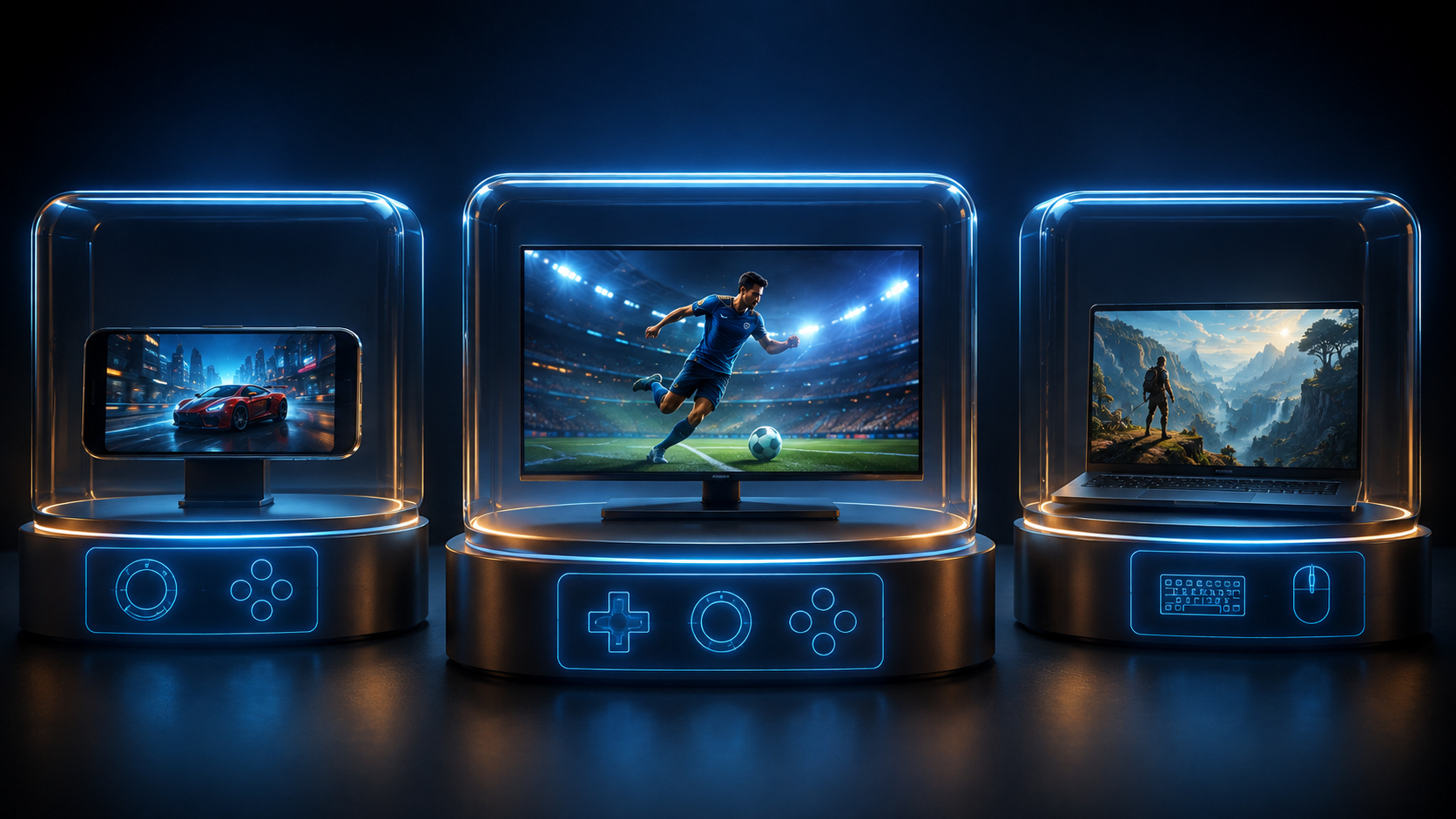
The same boundary applies to purchases and progress. A familiar GameBee identity across screens does not establish shared entitlement, cross-save or synchronized achievements. Those features require explicit evidence for the exact packages. This discipline is part of a credible multi-platform story: it tells players what is connected and what still needs confirmation.
Store records turn platform breadth into usable proof
A platform claim becomes useful when it leads to a current, exact action. The GameBee games catalogue can introduce a title, but the store record should answer whether it is available for the intended device. That is where a visitor sees compatibility, terms and the developer identity attached to the download.
For the studio, separate records also allow each edition to communicate its screen clearly. For the player, they prevent an Android TV package from being mistaken for a phone app or an Apple TV edition from being assumed on every Apple device. Public evidence works best when it narrows the decision.
PC introduces a different expectation set
Moving toward PC adds questions that mobile and television visitors may not need to ask in the same way. Which operating systems are supported? What hardware is required? Does the game use keyboard and mouse, controller input or both? Is there a demo, playtest, Early Access release or full launch? Which store owns updates and support?
These answers should come from an official PC storefront and approved GameBee communication. A planned title name cannot supply them. That is why Lost World should currently be described as a disclosed PC project, without a public price, release date, demo or wishlist action.
Lost World marks intent, not availability
The approved GameBee material identifies Lost World: The Game of Destiny as a planned first PC release. This establishes direction: the studio intends to bring its work into a dedicated PC context. It does not establish that the game is already on Steam or that a consumer can take a store action today.
When the public record arrives, it should be evaluated through the same evidence standard as the existing portfolio. The title, developer and publisher identities should match. Media should be authentic and approved. System requirements and input should be visible. A demo or wishlist control should lead to the exact product rather than a generic platform destination.
What transfers from earlier platforms
The strongest transferable habit is not a specific control scheme. It is the discipline of making the player action clear for each screen. On mobile, that means selecting the correct phone or tablet package. On television, it means confirming device and input. On PC, it will mean matching the storefront, system requirements and release state.
The studio can also carry forward recognisable title identity, direct store pathways, authentic media and update communication. These are public-facing practices rather than claims about a private engine, pipeline or internal workflow. They can be verified from what the player receives.
What must be newly proven on PC
PC performance, settings, keyboard support, controller mappings, ultrawide behaviour, cloud saves, achievements and accessibility cannot be inferred from a mobile or TV portfolio. Neither can Steam Deck compatibility or cross-progression. Each is a new title-level claim with its own evidence.
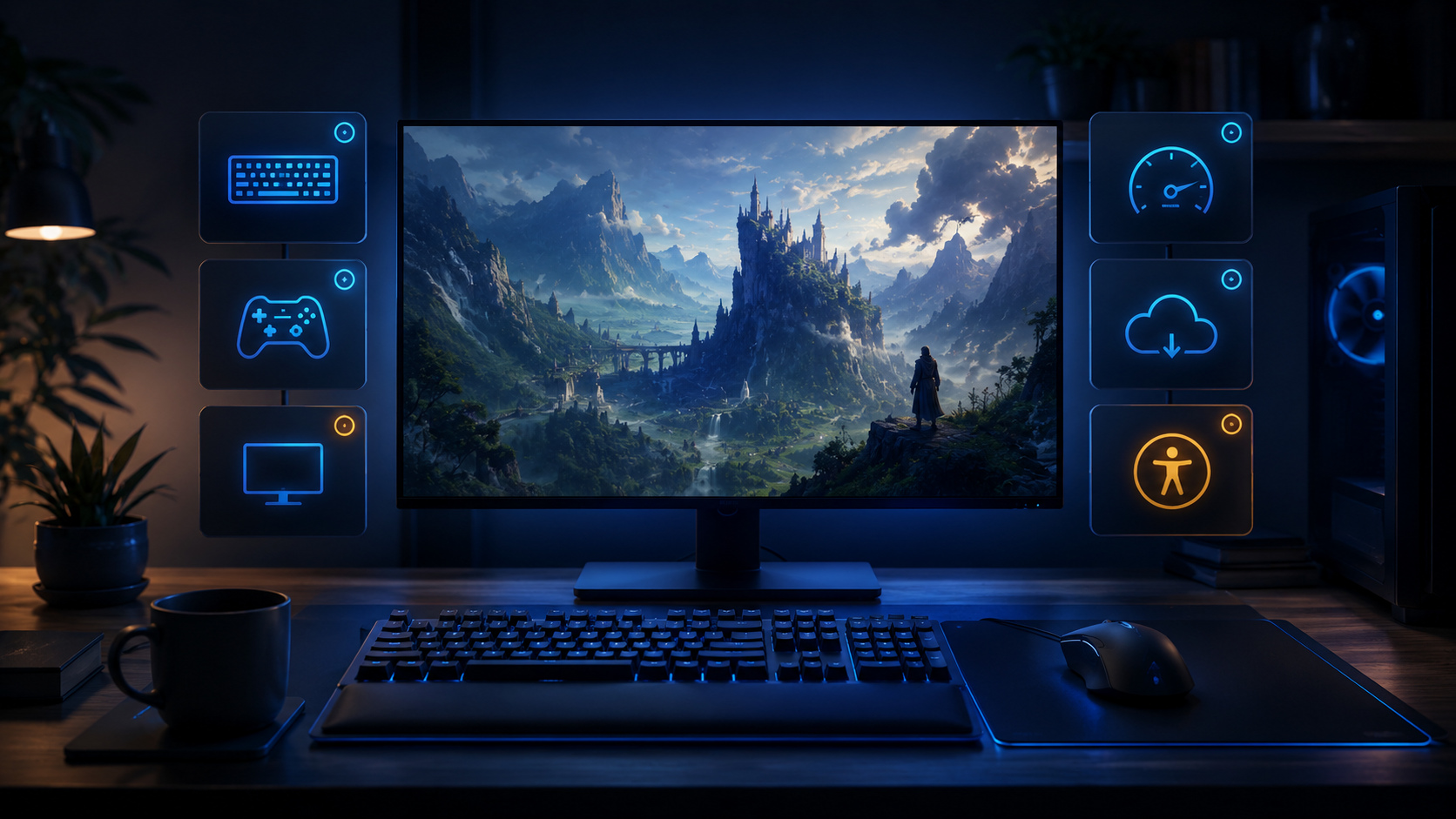
A responsible PC launch should therefore begin with a smaller set of precise facts rather than an inherited list of platform promises. Clear minimum requirements and a correct wishlist action will do more for player confidence than a broad claim that everything already works everywhere.
Follow the journey from current games to the next milestone
Players who want something available now can explore GameBee's live catalogue and move to the exact store for their device. Players interested in PC can follow the official GameBee site for an owned announcement. Once that announcement connects to a verified PC storefront, the journey gains its next public step.
This order serves both groups. It respects the current business while building interest in the future. It also keeps the GameBee brand attached to evidence rather than to a countdown that may change.
Multi-platform journey questions
Does GameBee make every game for mobile, television and PC?
No. The public catalogues show platform-specific availability, and some related titles use separate editions. Confirm each game and device through the current store record.
Is Lost World already a released GameBee PC game?
No public release destination was verified on 14 August 2026. Lost World is named as a planned GameBee PC project, so availability claims and store actions remain blocked.
Do GameBee editions share progress and purchases?
Do not assume they do. Separate packages and stores can have separate progress, accounts and entitlements. A shared feature requires explicit title-level confirmation.
What will prove the next stage of the PC journey?
An official GameBee announcement connected to a verifiable product storefront, with authentic media, supported systems, input information and an exact player action, will establish the public milestone.
A journey measured by verifiable player actions
GameBee's mobile and television work can already be explored through current stores. PC becomes part of that same public story when a player can inspect and act on an official record. Until then, the accurate narrative is progress with a boundary: established editions across smaller and larger screens, and a named PC ambition waiting for its evidence.