

The fastest way to improve in World Sports Games & Athletics is to isolate one cue, repeat one event and compare one result at a time. Track, field, archery and swimming ask for different execution, but all four reward the same practice discipline: observe the prompt, keep the input repeatable, and change only one part of the attempt.
Open the live World Sports Challenge overview for the current title context, then use the tutorial inside your installed edition for exact controls. The Android and Apple listings describe different event sets and features, so this guide focuses on transferable decision-making rather than an unverified button sequence.
Establish a clean practice baseline
Begin in the shortest mode that lets you repeat the target discipline. Make one comfortable attempt without chasing a record. Note the result type—time, distance, height or accuracy—and identify the visual or audio cue that seems connected to it. On the next attempt, preserve everything except one decision.
This method is slower for two rounds and faster over ten. Random changes make a good result difficult to reproduce. A baseline reveals whether improvement came from rhythm, release, aim or sustained input.
Track: build rhythm before maximum pace
Treat the start as its own skill
Watch the on-screen start sequence and react to the valid signal rather than guessing. An early action can cost more than a slightly conservative response. Repeat starts separately when the mode allows it, and compare consistency before trying to shorten reaction time.
Hold a sustainable cadence
Once moving, prioritize an even pattern. If your inputs become erratic near the finish, you may be starting at a pace you cannot maintain. Make a deliberate moderate attempt, then increase intensity in small steps. The goal is not merely to press faster; it is to produce input the game recognizes consistently.
For events that add obstacles or phases, learn the base rhythm first. Insert the new action only after the underlying cadence is stable. Trying to solve pace and obstacle timing together can hide which decision caused the miss.
Field events: separate approach, release and result
High jump, long jump, javelin and hammer appear in the verified Android event description. Each can combine preparation with a decisive timing moment, even though the exact control sequence belongs to the current tutorial.

Use a repeatable approach
If the event includes a run-up or preparation phase, keep it stable for several attempts. A changing approach shifts the release cue and makes comparisons noisy. Once the setup is repeatable, adjust the decisive action by a small amount.
Change timing before chasing power
A maximum-strength input cannot rescue a badly timed release. First find a window that produces valid, repeatable results. Then explore whether slightly earlier or later timing changes distance or height. Record the direction of the change mentally: “earlier improved,” “later reduced,” or “no clear difference.”
Read invalid attempts as specific feedback
A foul or failed jump is information. Decide whether the problem occurred during approach, trigger or follow-through instead of immediately changing every input. Return to the last valid pattern, then modify one element.
Archery: prioritize a settled sight picture
Archery rewards deliberate alignment. Move toward the target smoothly, pause long enough to understand drift, then act when the aim is most stable. Large corrections near release often create a wider miss than accepting a small, predictable offset.
Use the result to distinguish direction from consistency. If a group lands repeatedly to one side, make a small systematic correction. If arrows scatter in every direction, work on steadiness and release timing before adjusting aim. This is a general precision-game method; the installed edition’s prompts decide the exact gesture or button.
When a review or older guide mentions calibration, treat it as version-specific feedback. If current aim behaves unexpectedly, recheck input, restart the event and document platform and version before assuming a universal defect.
Swimming: protect the full length, not the opening seconds
Swimming can tempt players into an aggressive start that becomes impossible to sustain. Use a controlled first attempt to learn the recognized rhythm across the complete distance. If the game presents turns or transitions, practice entering them cleanly before increasing overall pace.
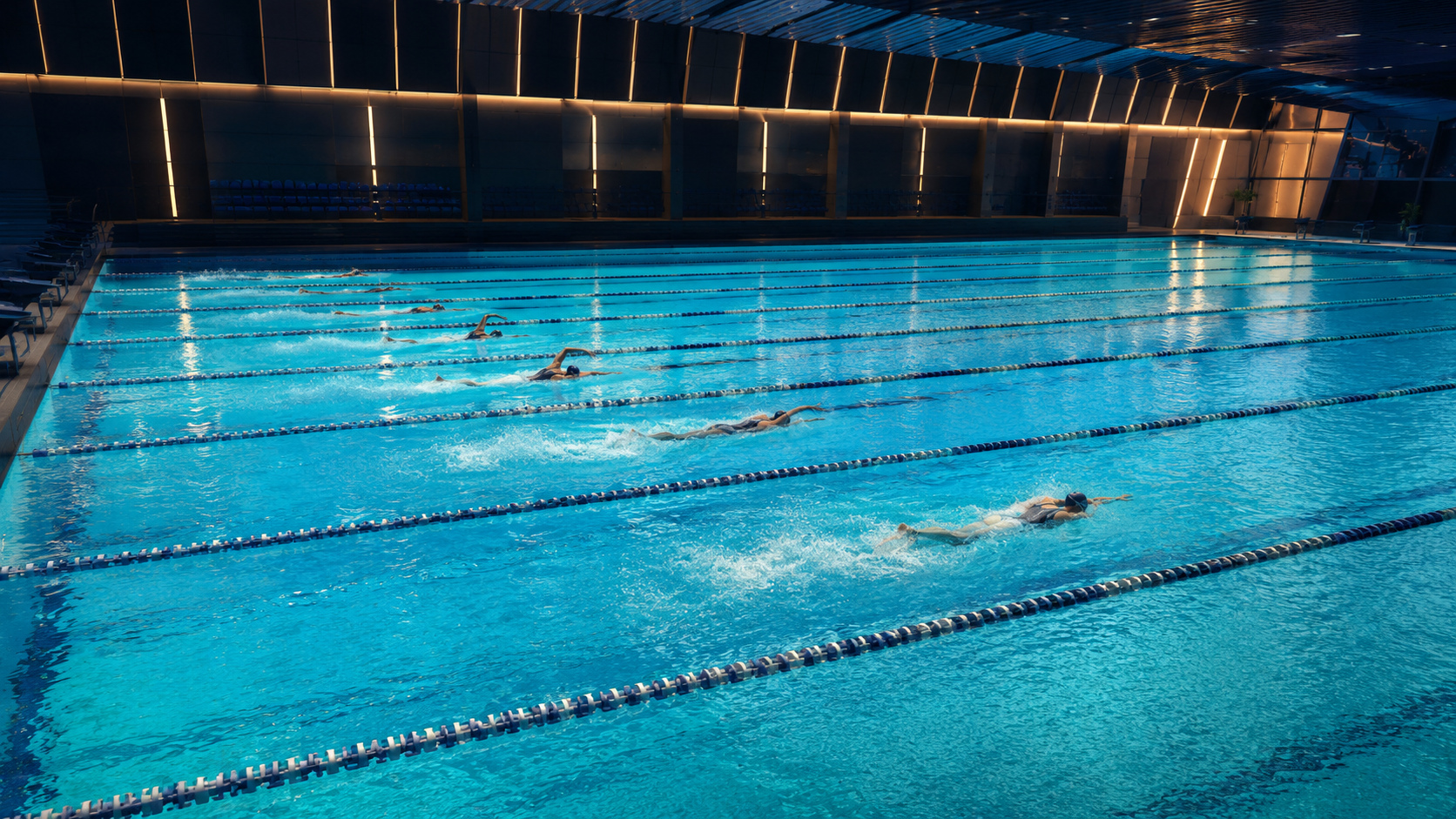
Look for where performance falls away. A slow opening, inconsistent middle and weak finish are different problems. Change the phase that loses the most time while preserving the rest. If the result improves, repeat the pattern to confirm it was not a one-off.
Transfer the method to cycling and precision events
The same framework applies beyond the four headline disciplines. In cycling, establish a cadence you can sustain, then test controlled increases. In air pistol, use the archery distinction between consistent offset and scattered aim. In weightlifting, follow the current on-screen sequence and isolate timing from intensity.
Do not assume that similar-looking events share exact inputs. The value transferred between them is the practice method: baseline, cue, one change and comparison.
Build a tournament plan around reliable points
Before entering a longer sequence, identify three categories: dependable events, developing events and unfamiliar events. Use dependable disciplines to protect consistency. Give developing disciplines one simple target, such as a valid attempt or stable rhythm. Treat unfamiliar events as reconnaissance rather than demanding an immediate record.
If the tournament order is visible, prepare for contrast. A rhythm-heavy event followed by precision can reward a brief reset. Relax your grip, read the next prompt and avoid carrying the previous input pattern into a new discipline.
Review results without overreacting
Compare a small set of attempts under similar conditions. One personal best can be encouraging, but three close results reveal a repeatable skill. When performance changes after an update or on another device, rebuild the baseline instead of forcing the old timing.
Store reviews sometimes raise issues involving ads, interface behavior or calibration. These can be valid individual reports, but they do not prove every player will have the same experience. If a technical interruption affects practice, record device, platform, version and event before reporting it.
Training questions
Which event should a new player practice first?
Choose an event with a result you can understand immediately and a short reset. A basic track discipline or a precision event can work well, but the best starting point is the one whose tutorial and feedback are clearest in your edition.
How many attempts should I make before changing technique?
Use at least a small cluster of comparable attempts rather than reacting to one result. If the same pattern repeats, adjust one variable. If results vary widely, first make the input more consistent.
Do these tips use the same controls on Android and Apple devices?
No control equivalence is assumed. The tips describe timing, observation and review. Follow the tutorial in the exact Android or Apple edition for gestures, buttons and mode rules.
What should I do if an event feels miscalibrated?
Reconnect or check the input, restart the event, install current updates and retest with a controlled baseline. If the issue remains, report the platform, device, version, event and repeatable steps rather than making a general claim about every edition.
Turn one event into a repeatable strength
Visit World Sports Challenge, choose the correct store edition and practice one discipline with the baseline method. Consistency first gives every later speed, power or accuracy adjustment a useful reference point.