

An arrow leaves the bow in a moment, but the result is shaped before release. Archery Arena: Shooting Clash turns that preparation into the core challenge: judge the target, settle the aim, choose the right amount of correction and commit while distance, movement or a time limit adds pressure.
The current Apple edition combines offline practice with online competition. You can learn the feel of the shot without a live opponent, then carry that repeatable process into real-time duels, tournaments and leaderboard play when you want a result that another archer can challenge.
A clear shot begins before you release
Archery feels consistent when you build the same sequence around every attempt. Read the target first, align the aim without rushing and make one deliberate correction instead of several late movements. Smooth input matters because the final adjustment is often smaller than the distance to the target suggests.
The game is easy to understand – draw, aim and release – but precision gives that loop depth. A missed arrow is useful when you can explain it. If the shot fell short, review power. If it drifted, review alignment and movement. Turn each result into one change for the next attempt.
Different targets demand different plans
The App Store description highlights moving targets, long-distance shots and time-limited challenges. Each tests a separate part of control. Distance makes small alignment errors more visible. Movement asks you to predict where the target will be. A timer tests whether your routine remains stable when the game asks for speed.
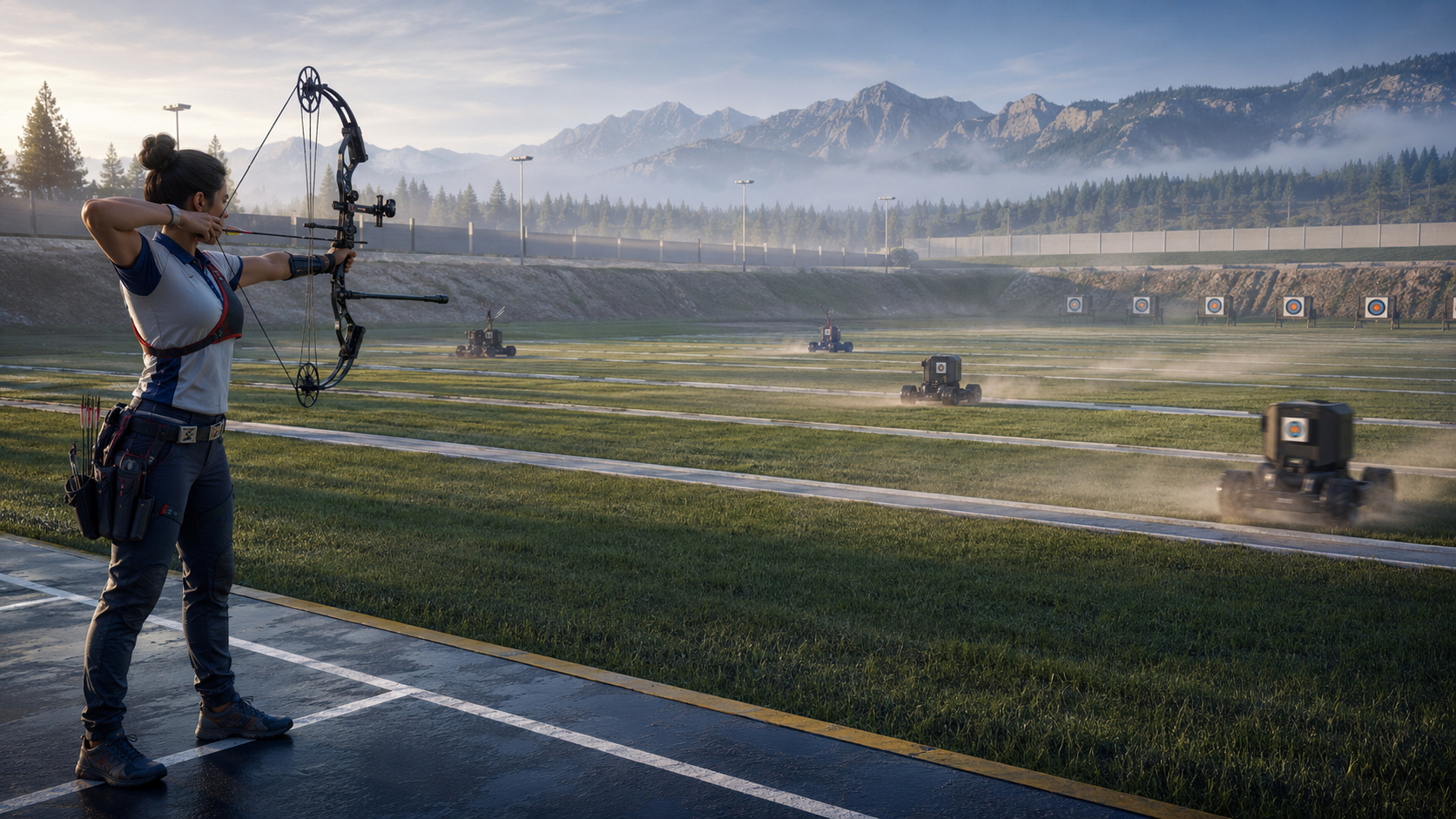
Do not solve all three with the same response. Create a calm baseline on a stationary target, then change only what the challenge requires. That protects good technique from being replaced by hurried corrections.
Long-range stages magnify small errors
Use the first arrow to read the result rather than forcing a perfect opening shot. Make a measured correction and compare the next grouping with the first.
Moving targets reward anticipation
Watch the rhythm before drawing fully. A steady lead based on the target's path is more reliable than chasing it across the arena at the last second.
Timed challenges test the routine
Shorten the pause between steps, not the steps themselves. A compact, repeatable sequence usually produces better speed than releasing before the aim settles.
Real-time duels turn consistency into pressure
A duel changes the meaning of a single miss. The useful response is not to copy the opponent's speed or chase a dramatic recovery; it is to protect the shot process that produced your strongest arrows. Competitive play becomes manageable when the opponent affects the score but not your routine.

Tournaments and seasonal events give that consistency a longer arc. Use them to measure whether your average group is improving, not only whether one arrow reached the center. Leaderboards show position, while repeated shot quality shows what you can control.
Equipment can widen the margin, but skill still decides the shot
Progression includes bows, precision arrows and other gear. Upgrades can change performance, yet they work best when you already understand your baseline. Test new equipment in a familiar challenge so you can feel what changed instead of attributing every result to the item description.
Choose gear that supports the difficulty you actually face. Stability can help a careful long-range player; a different setup may suit fast duels. The strongest choice is the one that makes your input easier to repeat, not simply the item with the most impressive label.
Offline practice and online competition serve different goals
Offline play gives you room to learn controls and challenge patterns without waiting for a live opponent. Use it to establish aim, release timing and correction habits. Online duels add uncertainty, ranking pressure and another player's pace, making them a better test of whether those habits survive competition.
The listing says both offline and online modes are available. Individual events may still have their own connection requirements, so check the current in-game label before starting a session that must work without internet access.
Build a repeatable aiming routine
Begin each new arena with a calibration shot. Observe height and drift, make one correction and then keep your release tempo consistent. When the target changes, return to calibration instead of carrying an old adjustment into a new distance or movement pattern.
If accuracy falls across several arrows, pause before changing equipment. Fatigue, rushed input and over-correction can look like weak gear. A brief reset often restores more control than another upgrade.
Move from one precision event to a wider sports challenge
Archery also appears inside World Sports Games & Athletics, where the skill sits beside track, swimming, cycling, jumping, throwing and shooting events. Choose Archery Arena when you want deeper bow-focused competition; choose World Sports when variety is the main attraction.
When the linked collections are live, Sports Games will help you compare GameBee's precision and match-based titles, while Pool Masters Pro – Multiplayer offers another game where angle, power and calm execution decide the outcome.
Archery Arena answers before drawing the bow
Does Archery Arena include real-time competition?
Yes. The current App Store description lists real-time PvP duels, tournaments, leaderboards and seasonal events.
Can I practice Archery Arena without an internet connection?
The listing describes offline and online modes. Some competitive events or store functions can still require a connection, so check the mode label before play.
What kinds of targets appear in the game?
Apple highlights moving targets, long-distance shots and time-limited challenges across fields, stadium-style venues and professional archery ranges.
What should parents check before downloading Archery Arena?
The App Store currently shows a 9+ rating, advertising and in-app purchases. Review the live rating details, purchase options and device requirements before installation.