
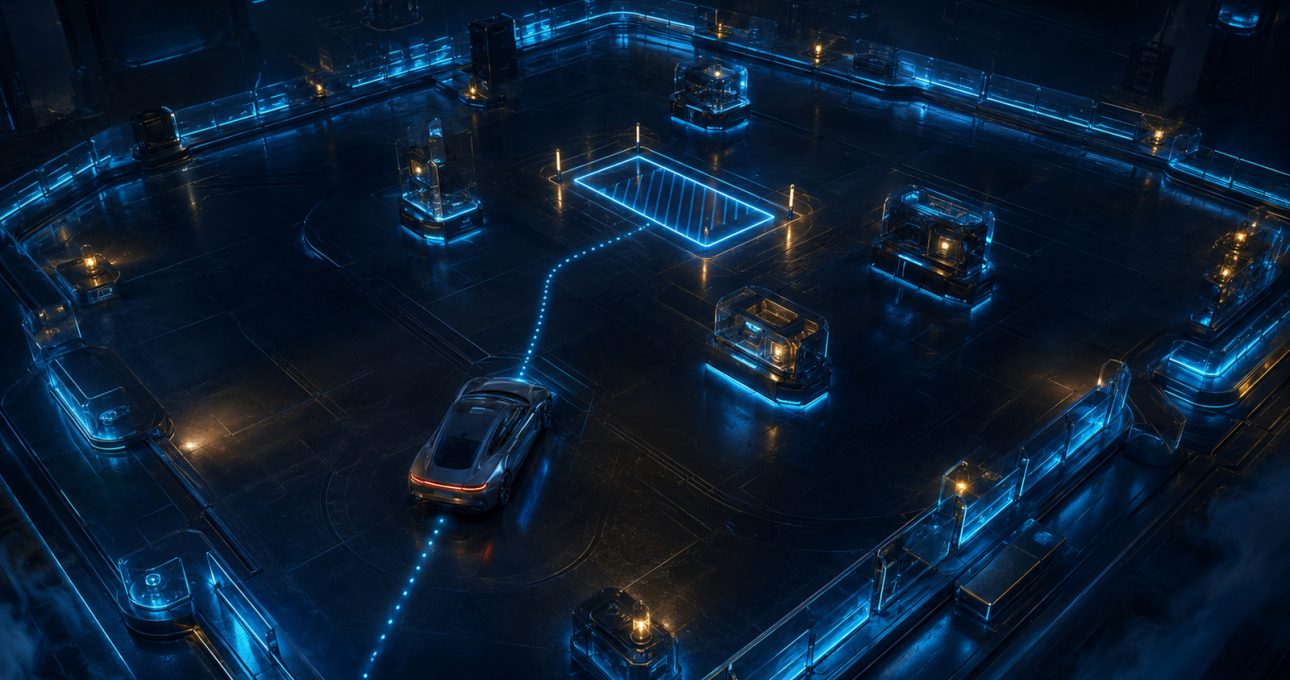
Reverse parking and tight turns in Parking School 2024 become easier when the player separates setup, steering and correction. The legacy GameBee product and Amazon edition establish a 60-level parking simulation with multiple cars. They do not publish a universal control map, steering angle or camera sequence.
Use the prompts in ASIN B096VV52LM and practise only inside the game. This guide is not real-world driving instruction. Actual parking requires supervised learning, mirrors, blind-spot checks, traffic awareness, local law and vehicle-specific judgement.
Study the virtual bay before moving
Identify the target boundaries, entry space and obstacles around the vehicle. Decide which side needs the most clearance and where the car should finish. A clear mental picture reduces corrections made only after the vehicle is already misaligned.
The course may use painted lines, cones or other markers. Treat them as in-game cues. Their dimensions do not represent a universal real parking standard and should not be converted into physical measurements.
Learn the current edition's input response
In a forgiving level, test a short forward input, a short reverse input and a small steering command. Observe how quickly the car begins to move and how long it continues after release. Camera controls, if present, should also be confirmed in the installed build.
Do not assume that touch, remote or gamepad timing is identical. A method learned on one device may require a new baseline on another. Small tests prevent an unfamiliar response from being mistaken for poor strategy.
Build space before beginning the reverse arc
A tight manoeuvre often fails because the starting position leaves no room for rotation. If the game allows, move into a setup that gives the front of the car room to swing while the rear approaches the target. Judge the result from visible clearance rather than a memorised angle.
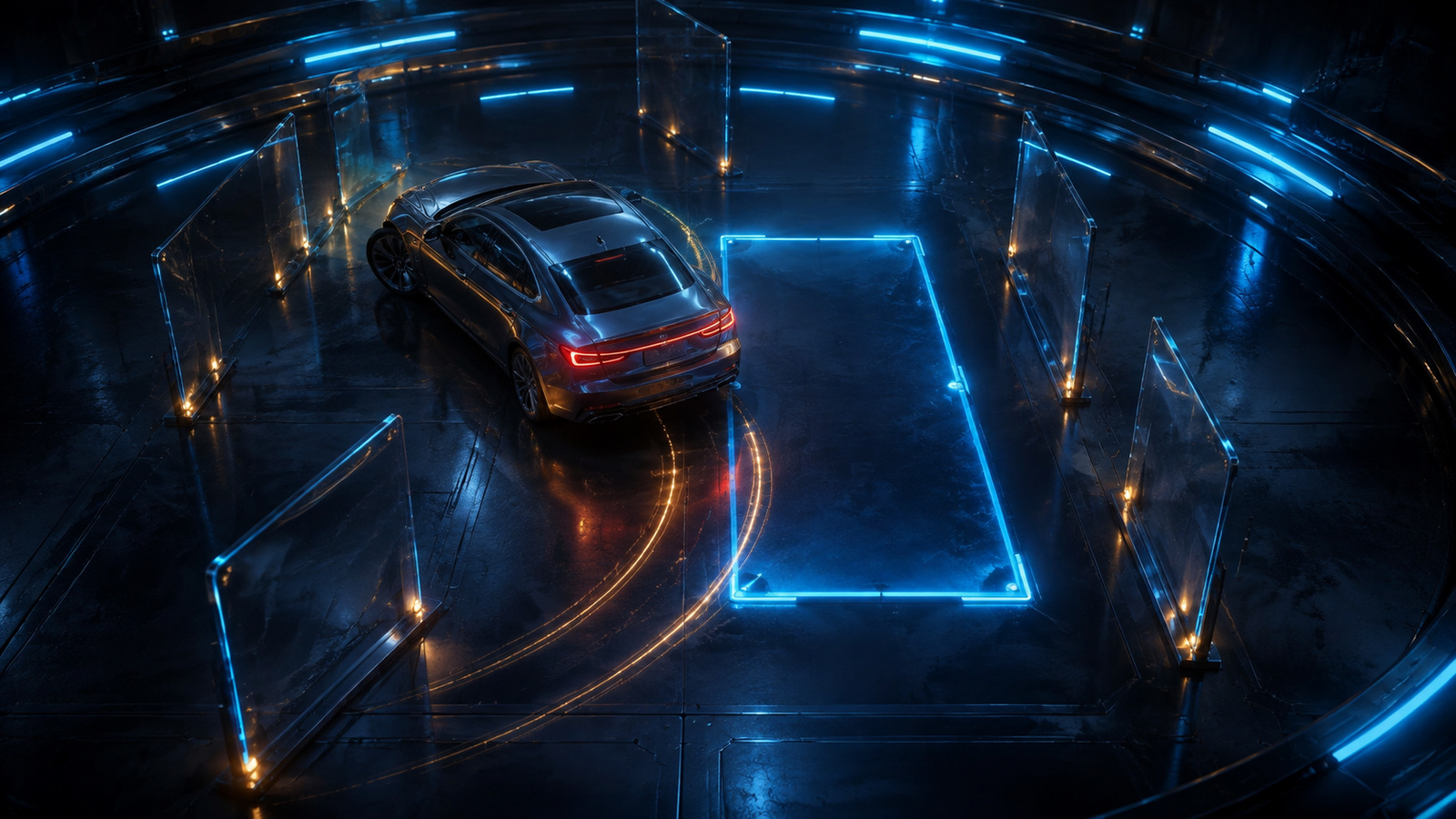
When the setup is poor, restarting may teach more than forcing repeated corrections. A clean beginning makes the effect of steering easier to observe and repeat.
Reverse slowly enough to read the change
Use short controlled movement so the vehicle's orientation remains visible. After each input, observe whether the rear is moving toward the target and whether the front still has clearance. A long uninterrupted reverse can hide the point at which alignment began to fail.
The exact speed response belongs to the current car and edition. This article does not assign a numerical throttle level. The aim is simply to preserve time for another decision.
Separate steering from correction
Begin the turn, watch the vehicle rotate and then reduce or reverse steering only when the visible alignment calls for it. Rapid alternating inputs can produce a zigzag that is difficult to diagnose. One clear change at a time creates better feedback.
If the rear moves too far to one side, identify whether the cause was the starting position, steering timing or excessive movement. Correct the earliest cause on the next attempt instead of adding a larger late input.
Use the camera to answer a specific question
If the installed edition offers different views, choose one based on the current uncertainty. A wider view may show the whole bay and front clearance; another view may make the rear boundary easier to read. Avoid switching repeatedly without knowing what information is needed.
Camera availability and behaviour must be confirmed in the current build. The public descriptions do not promise mirrors, sensors, guides or a particular perspective.
Straighten before making the final approach
Once the car is mostly inside the target area, reduce the steering angle and align the vehicle with the visible boundaries. Continue in small steps so a good position is not lost through unnecessary movement. Completion feedback in the game determines whether the level accepts the result.
Do not chase visual perfection beyond the stated objective. A valid finish is the best baseline. Precision can be improved after the player understands how the edition scores or recognises completion.
Practise tight turns with a three-point rhythm
For a narrow virtual corner, use three questions: Is there enough entry space? When should the main turn begin? Where must the car be pointing before the next input? This rhythm helps the player avoid steering solely in reaction to the nearest boundary.
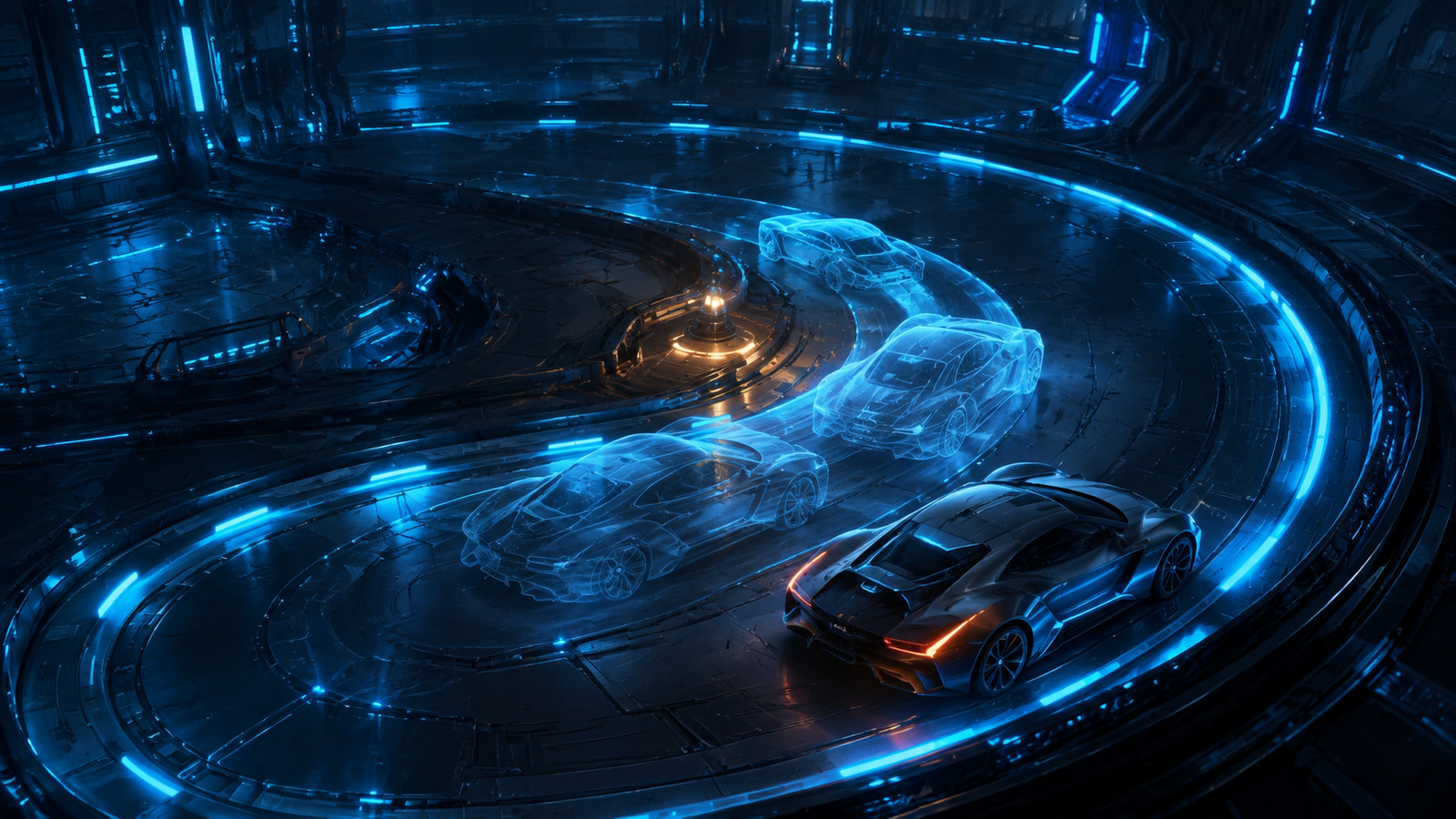
If one attempt fails, change only the entry position or timing. Changing both hides the reason. Repetition under comparable conditions turns the course into a useful control exercise.
Keep one car while learning the manoeuvre
The product offers multiple cars, but a change in vehicle can alter visual size or handling response. Use one available car until the parking arc is repeatable. Then compare a second car in the same level and note what requires adjustment.
Appearance does not prove performance. If the build displays attributes, use them as in-game information. Do not assume that a larger or sportier model is harder, faster or more capable without current evidence.
Review failures with a four-part note
After an attempt, record setup, entry, steering and final alignment. Name the first stage that went wrong. This produces a precise next action and prevents frustration from becoming random input.
Use the GameBee catalogue for broader discovery. Players who prefer faster racing rather than parking precision can inspect Master Racer; its tracks and controls remain separate from this simulation.
Parking School 2024 technique questions
What should be checked before reversing?
Read the target boundaries, available entry space, nearby virtual obstacles and the position where the car should finish. Then confirm how the installed edition responds to short movement and steering inputs.
Why do large corrections make the manoeuvre harder?
They can carry the car beyond a readable position and create another correction. Small inputs make the cause and result easier to compare inside the simulation.
Should the camera be changed during every attempt?
No. Change views only to answer a specific visibility question, such as rear alignment or front clearance. Confirm which camera options the current edition actually provides.
Can these tips be used for real-world parking?
No. They are gameplay guidance for a virtual simulation and do not replace professional instruction, supervised practice, local law, blind-spot awareness or vehicle-specific training.